
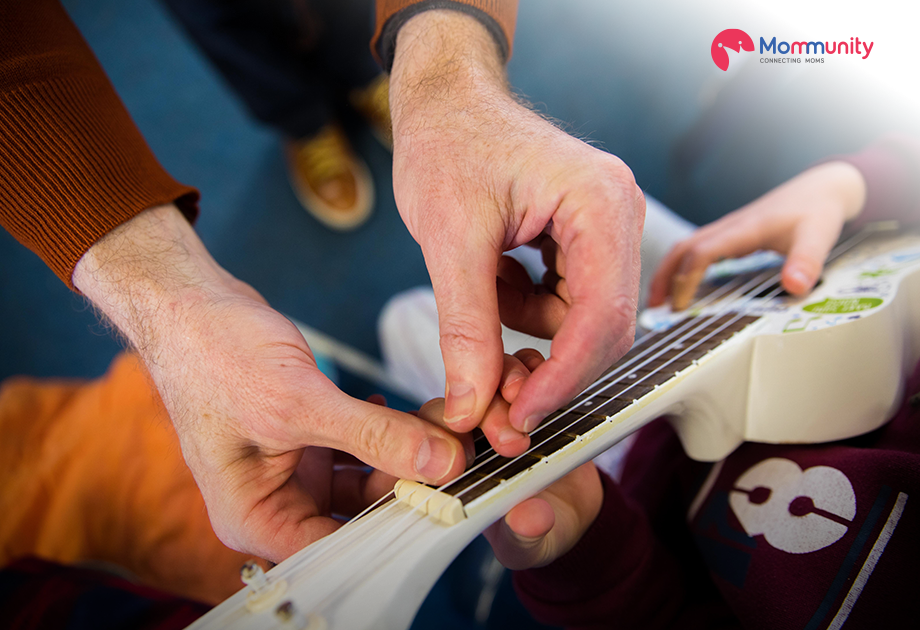
What if weekly music lessons could quietly strengthen your child’s brain, without extra screen time or textbooks?
Research shows that consistent music lessons can have measurable effects on your child’s brain development, learning ability, and even their intelligence scores. This isn’t about a quick “Mozart effect” trick that boosts IQ for a few minutes. This is about structured learning and active engagement with music over time, and the real changes it can support in a growing mind.
What Research Says About Music Lessons and IQ
Numerous scientific investigations have examined the relationship between regular music lessons and cognitive development in children, as well as how these connections may impact cognitive development, particularly in terms of performance on tests that measure an individual’s cognitive abilities (i.e., IQ tests).
For example, while some studies have shown that children taking structured music lessons perform better than children who do not take structured music lessons, there were also studies on how much children’s IQ scores have changed based on how long they have received structured music lessons.
In one study, researchers tracked children aged 6 years to 11 years over a period of time and found that as time increased for a child receiving structured music lessons, the child’s IQ scores went up and that there was a positive correlation between receiving structured music lessons, and scores on academic tests, even after accounting for socio-economic variables such as family income and the level of education of the parents.
Additionally, a number of studies using a controlled experiment with preschool children (ages 5-6) have shown that after taking consistent music classes, children show increased progress on verbal reasoning and on short-term memory tests when compared to similar children who did not take structured music lessons.
Overall, these findings demonstrate that music lessons are associated with an increase in cognitive ability in several areas, including verbal reasoning, memory, and pattern recognition, and thus have an impact on an individual’s ability to develop their own intelligence.
The Role of Music in Your Child’s Development through Active Learning

Your child’s brain does more than just memorize notes when they learn to play an instrument:
Listening Skills
The training of music enhances auditory processing skills and allows the brain to better perceive sounds. Auditory processing includes many different listening skills, such as phonemic awareness, and it is also important for developing language and reading skills.
Motor Development and Coordination
When children learn to play an instrument, they connect the sensory inputs of the brain with the motor outputs of the body. This helps to develop stronger neural networks involved in coordination and focus.
Memory Development And Attention Span
In the study of music, children must be able to remember a sequence of notes and continue to focus on the relationship between them over time. Regular music lessons help to increase working memory, attention span, and other factors associated with measures of intelligence, such as IQ scores.
What are the Advantages Associated With IQ?
The scope and level of effect must be understood by examining the data available:
Research has shown that there is a direct correlation between receiving music lessons and the increase in a person’s Full Scale IQ, as well as improvement in cognitive ability through improvement in the following areas – Verbal Reasoning, Memory, etc.
As mentioned above, while the studies indicate an increase in Overall IQ as well as an increase in specific areas, the actual increases are relatively small compared to the potential increase associated with cognitive development through musical training over time.
While studies continue to indicate that musical instruction provides a longer-term benefit if provided regularly over an extended period of time, the evidence does suggest that musical training should not be viewed as a “replacement” or an alternative to schoolwork, tutoring, etc., but rather as an “enhancing activity”.
Benefits Beyond IQ
Participating in music programs yields much more than increased test scores:
Education
Children participating in music programs tend to outperform peers without music instruction in reading and mathematics due to the increased development of their pattern recognition and memory skills. Those gains in pattern recognition and memory transfer to improved academic performance.
Language Development
Similar to the use of music for language development, music instruction uses the same areas of the brain that are involved in the processing of language. Children who receive music lessons are likely to have improved language skills, such as an improved ability to discriminate between phonetic sounds in speech.
Improved Attention and Problem-Solving Skills
Learning to play an instrument requires a child to develop attention span, self-discipline, and problem-solving skills. Children can use these skills to improve their academic performance as well as in their everyday lives.
Personal and Social Development
Through self-confidence and developing patience and the ability to express oneself through music, children engaged in music classes build important personal/social characteristics. These character traits will serve them well as they experience success in and out of the classroom.
What Parents Should Expect
If you decide to support your child’s music learning, here are some realistic points to keep in mind:
- Consistency matters: Short bursts of lessons show less impact than ongoing study over months or years.
- Quality matters: Structured, guided instruction shows the strongest associations with cognitive gains.
- Not every kind of music exposure counts: Passive listening alone (e.g., playing music in the background) does not show lasting IQ effects.
FAQs
Do all children benefit equally from music lessons?
Research indicates that children with a natural affinity for music tend to develop specific musical abilities more quickly than those without an inherent inclination towards music. Children’s ability to access musical instruction can also be affected by their family’s socioeconomic status.
Studies show that memory, attention, and cognitive processing skills improve for children from all socioeconomic backgrounds when they receive consistent instruction.
Will music lessons make my child “smarter” in school?
While music education contributes to many cognitive skills that aid in the learning process, it is not an automatic means of increasing academic performance. In combination with regular classroom work and a positive learning environment, music can enhance a child’s overall academic performance.
What is the best age to begin?
Many experts agree that preschool age is the most critical time for developing auditory and language skills, but it is also important to provide musical instruction as children mature. Regardless of age, frequent, guided practice is essential.