You’re bloated, tired, and your mood is all over the place. Sound familiar? These symptoms can leave you wondering, is your period just around the corner, or could you be pregnant? Since early pregnancy signs often mimic premenstrual syndrome (PMS), it’s easy to misread the signals your body is sending. Before you reach for a test kit or Google every twinge, these are the 10 clear ways to help you tell the difference between PMS and early pregnancy.
Here are 10 ways to tell whether you’re dealing with PMS or early pregnancy
1. Time of Symptoms
PMS – The symptoms show up commonly one to two weeks before the menstrual cycle and then frequently either lessen or vanish entirely with the start of menstruation.
Pregnancy – A few women could feel the early pregnancy symptoms just after ovulation, which might either overlap with their period or be much later. These symptoms normally continue and may even get stronger.
Another indication of pregnancy could be the symptoms lasting longer than your expected period instead of fading.
2. Period or Spotting / Bleeding
When suffering from PMS, menstrual discharges arrive at the correct time.
At the beginning of pregnancy, some women might notice a very light bleeding or implantation, which is probably the shortest and lightest stage of all the periods, often brown or pink in colour instead of bright red. In case your period is lighter or shorter than usual and consists mainly of faint bleeding rather than complete bleeding, that could be a sign of pregnancy rather than menstruation.
3. Breast Changes and Tenderness
Tough PMS and early pregnancy give rise to the same symptoms, like breasts feeling tender, sore, or heavy, sensitivity, and swelling. However, if you notice more subtle changes like the areola getting darker or nipples being more sensitive, or looking different, this usually indicates pregnancy. In addition, though breast tenderness due to PMS usually goes away as soon as the menstrual cycle starts, in the case of pregnancy, it can last for several weeks.
4. Fatigue and Tiredness
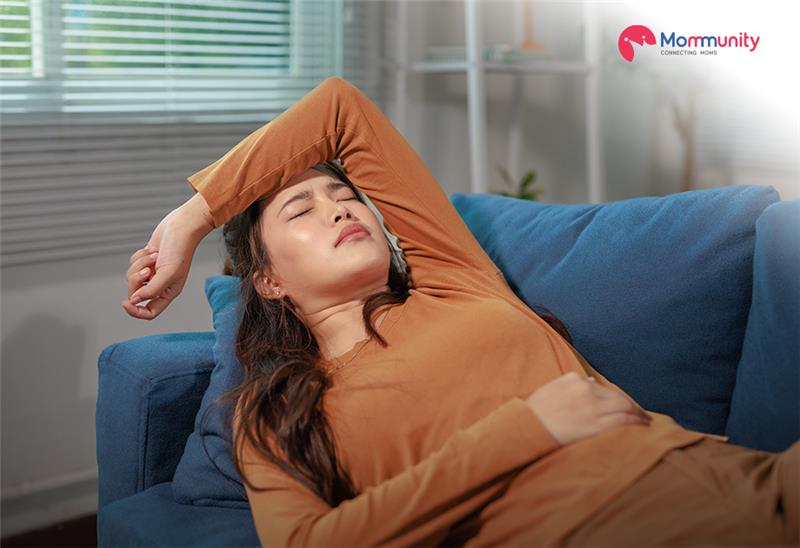
Sometimes people experience tiredness or lack of energy, which is a normal thing during PMS and early pregnancy. In the case of PMS, fatigue goes away as soon as your period starts. Conversely, early pregnancy could make fatigue even more pronounced and last longer because of the hormonal changes and the rise in blood volume.
5. Nausea and Morning Sickness
Nausea or vomiting is not a common occurrence in PMS. In the case of early pregnancy, nausea, which is sometimes referred to as morning sickness, is one of the most prevalent symptoms. It is estimated that a maximum of 80% of persons can experience nausea during the first trimester. So if you are experiencing nausea or vomiting, then it’s more likely pregnancy.
6. Cramping and Abdominal Discomfort
You may experience mild cramping at the same time in both cases, i.e., PMS and early pregnancy. In PMS, cramps generally are stronger, more frequent, and come with a period that has a build-up effect. On the contrary, during such a time in pregnancy, cramps may be mild, less frequent, and shorter in duration. Sometimes, they are referred to as implantation cramps. In the case of mild cramping along with spotting instead of a full period, it may indicate pregnancy.
7. Frequent Urination and Digestive Changes
A few PMS and early pregnancy signs are very similar in this case- bloating, mild constipation, and mood-related digestive changes. However, a frequent need to urinate and constipation are some of the pregnancy issues that most women face due to hormonal alterations and body changes. If these symptoms persist longer than your expected period date, you are likely pregnant.
8. Mood Swings, Emotional Changes, and Cravings
PMS is most often responsible for mood changes like irritability, mood swings, sadness, anxiety, and cravings. Early pregnancy may produce similar feelings, though sometimes they may be stronger or last longer. Both conditions show symptoms of craving and rejection regarding food, but a sudden repulsion to a previously loved food or a strong dislike of certain smells can be a sign of pregnancy.
9. Duration and Progression of Symptoms
Usually, with PMS, the symptoms increase before menstruation and disappear when the bleeding starts. On the other hand, in early pregnancy, the symptoms can be very weak at the onset and can develop into full-blown symptoms later. The changes in the breasts may become more pronounced, nausea may be a new symptom, fatigue may get even worse, and other things may happen. If the symptoms appear to be getting stronger rather than lessening, that’s a scenario that corresponds more to early pregnancy than PMS.
10. Missed Period
Pregnancy is one of the unmistakable causes, apparent when a missed period is perhaps one of the surest signs of pregnancy, especially if all the related symptoms persist. However, it should be noted that this can frequently happen because of other factors, such as stress, changes in weight, sickness, hormonal irregularities, and numerous medications.
The hormonal changes are characteristic of both PMS and early pregnancy. The body reacts in a similar way to the changes in hormones, whether it is preparing for menstruation or adapting to pregnancy, thus the many symptoms that are common. Some individuals might not feel much at all or only experience mild symptoms. It consequently becomes more difficult to depend just on personal feelings. An older study involving a small sample size indicated that women having severe PMS symptoms before pregnancy were more apt to have the pregnancy symptoms easily noticed, inferring that some individuals are more sensitized to hormonal variations.
What You Should Do to Know for Sure
It is advisable to perform a pregnancy test around the time your menstruation is expected. Most of the home tests identify the pregnancy hormone (hCG) at that time already. In case of a negative result but no menstruation or if the symptoms continue, think of doing another test after a couple of days or going to a doctor for a blood test or ultrasound. Record your monthly cycles and symptoms. Creating a straightforward chart or using a menstrual cycle tracking app can assist you in noticing trends and identifying any irregularities at an early stage.
When to See a Doctor
In case you are suffering from very severe cramps combined with a pregnancy test showing positive or extremely heavy bleeding, continuous vomiting and nausea resulting in dehydration, very strong mood swings that influence your daily life, then it is advisable to get a doctor’s opinion, which may not only be a support to your health but also clarify the situation.
If you found this article interesting, please share it with someone who can also benefit from reading it. Consider keeping a diary of your symptoms, you may find it easier to see patterns over time. And if you are unsure, don’t hesitate to contact a health professional.
Also Read: Learn more about effective birth control methods to avoid pregnancy
FAQs
1. Do food cravings during PMS imply that I might be pregnant?
Food cravings can be manifested in a similar way, both before the onset of the period and in early pregnancy. With PMS, the craving’s presence usually fluctuates until the period starts. If the craving doesn’t stop after the period’s due date, along with other manifestations, you might consider doing a pregnancy test.
2. Is it true that implantation bleeding always indicates pregnancy?
Implantation bleeding is the biological process that occurs when a fertilised ovum embeds itself into the endometrium. This may result in the appearance of slight spotting and the onset of slight cramping. However, it is not a universal process, and some bleeding may be caused by other factors. Therefore, a pregnancy test is still the most reliable way to find out.
3. Does fatigue and bloating point to PMS rather than pregnancy?
Fatigue and bloating are common signs of both pregnancy and PMS. If these symptoms are gone with your next period, then it is more likely that you are experiencing PMS. If they last longer than your expected period, then you may consider that it is the beginning of pregnancy.
4. What is the ideal time to perform a pregnancy test?
Most home pregnancy tests are considered to be reliable on the day your period is due, sometimes a day or two before. For the highest accuracy, please follow the instructions and consider testing again after a few days if your period has still not started.
5. Are irregular periods a factor that can confuse this matter?
Definitely, yes. Stress, diseases, hormonal changes, or specific medical conditions may result in either delay or cancellation of periods. If your cycles are erratic or uncertain, the symptoms may not be clear about PMS or pregnancy. In such situations, either a test or consultation with a doctor is usually the clearest way out.
This blog/article is intended for general informational and educational purposes only. It is not a substitute for professional medical advice, diagnosis, or treatment. Always consult your doctor or qualified healthcare provider with any questions about a medical condition, symptoms, or treatments.