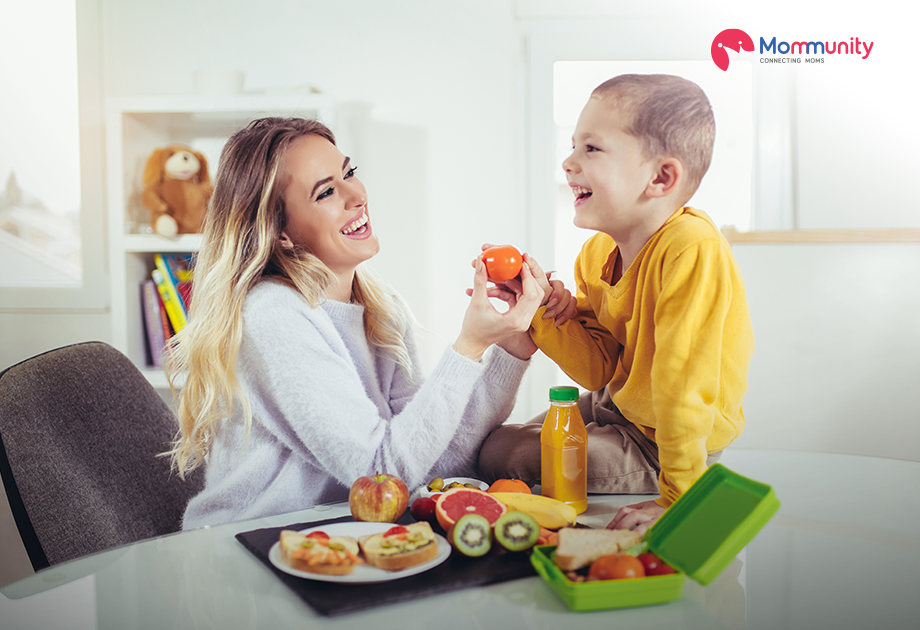
This is an unpredictable process with children when serving food to them. Your child requests more food on one occasion. The next day, they push the plate away after two bites. The situation describes a common pattern. Your toddler grows at a constant rate yet experiences variations in hunger due to changes in their sleeping patterns and teething process and their physical activity and emotional state. The most effective solution establishes an organized approach to feeding toddlers which provides you with dining room structure yet prevents mealtime conflicts from happening every day.
You can do that with two basics-
- Regular timing for meals and snacks
- Simple building blocks for a balanced diet toddler routine
Why planned meals and snacks matter in a toddler diet

Toddlers have small stomachs and high energy needs. That’s why many child health guidelines support a pattern of-
- 3 meals
- 2 to 3 planned snacks
- Food offered about every 2 to 3 hours
Planned timing protects your child’s appetite for meals and reduces “all-day grazing,” which often leads to picky eating and low intake at the table.
What a balanced diet toddler plan looks like
You do not need perfect plates. Across the day and week, your toddler diet works best when you regularly offer-
- Energy foods
Rice, roti, oats, poha, idli, upma, bread, potatoes, sweet potato - Protein foods
Dal, chana, rajma, eggs, paneer, curd, tofu, fish, chicken - Vegetables and fruit
Cooked sabzi, soups, soft fruit pieces, mashed veggies, seasonal fruit - Healthy fats
Ghee, oils, nut butter spread thin, seeds in powdered form (age-appropriate) - Calcium-rich foods
Milk, curd, paneer, ragi, sesame powder, fortified foods if advised
A simple portion guide- toddler servings are often much smaller than adult servings. That is normal.
Your easiest system for healthy meals

Use this 3-part method for most healthy meals. It keeps your toddler nutrition steady without complicated planning.
Part 1- One energy food
Rice, roti, oats, idli, dosa, daliya, sweet potato
Part 2- One protein food
Dal, curd, paneer, egg, tofu, fish, chicken
Part 3- One fruit or vegetable
Cooked sabzi, mashed veggies, soups, fruit pieces, fruit mixed into curd
Add a small amount of fat (ghee or oil) when it suits your family meals. Toddlers often need energy-dense foods because their stomach size is small.
Your easiest system for snack ideas

Snacks are part of the daily toddler diet, not extra food. Use this 2-part snack rule for quick snack ideas-
Option A- Fruit or vegetable + protein
Option B- Grain/starchy food + protein
Snack ideas you can rotate all week
Fruit/veg + protein snack ideas
- Banana + curd
- Papaya + paneer cubes
- Soft steamed carrot sticks + hummus
- Fruit chaat + plain curd
Grain/starchy + protein snack ideas
- Idli + sambar
- Moong chilla + curd
- Daliya porridge + milk
- Roti roll with paneer (soft filling)
Busy-day snack ideas
- Curd rice (small bowl)
- Boiled egg pieces + fruit
- Upma + curd
- Oats porridge with a thin spread of nut butter
Keep snacks planned and seated. It supports appetite and safety.
A toddler diet schedule that supports appetite
Try this as your default pattern-
- Breakfast
- Mid-morning snack
- Lunch
- Evening snack
- Dinner
- Optional milk based on your clinician’s guidance and your child’s intake
This schedule works well for many families because it spreads nutrition across the day without constant snacking.
A 7-day meal and snack plan you can copy
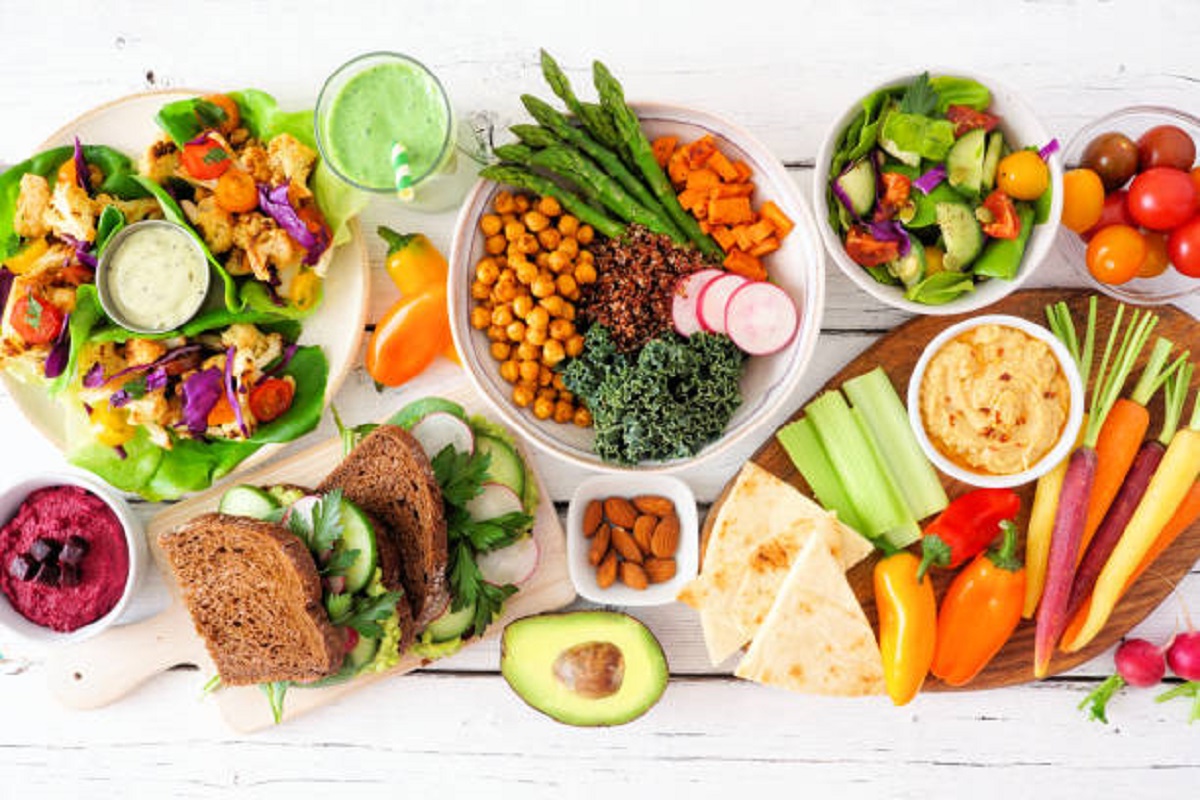
Use this as a planning starter. Swap foods based on your culture, season, and preferences.
Day 1
- Breakfast consists of Poha which is served with curd.
- The snack options include Banana with thinly spread peanut butter.
- The lunch meal consists of rice which is served with dal and pumpkin sabzi.
- The snack options include Idli which is served with sambar.
- The dinner meal consists of Roti which is accompanied by paneer bhurji and cooked veggies.
Day 2
- Breakfast- Oats porridge with fruit
- Snack suggestions- Curd with fruit
- Lunch: Khichdi with ghee and well-cooked spinach
- Snack suggestions- Moong chilla
- Dinner- Rice with mild curry and vegetables and protein options of egg or fish or chicken or paneer
Day 3
- Breakfast consists of vegetable upma.
- The snack ideas include paneer cubes and mango.
- The lunch menu consists of roti chana and sabzi.
- The snack ideas include daliya porridge.
- The dinner menu includes curd rice and vegetables.
Day 4
- Breakfast consists of Idli and mild chutney.
- The snack ideas include boiled egg pieces and fruit.
- The lunch menu includes rice, rajma and vegetables.
- The snack ideas include soft homemade veggie cutlet.
- The dinner meal consists of roti, dal and sabzi.
Day 5
- Breakfast consists of Dosa and sambar.
- The snack ideas include Curd and mashed banana.
- The lunch meal consists of Rice Dal and carrots/peas.
- The snack ideas include Hummus and soft steamed veggies.
- The dinner meal includes Roti with tofu or paneer and sabzi.
Day 6
- Breakfast consists of Ragi porridge and fruit.
- The snack ideas include Fruit and curd.
- Lunch consists of Lemon rice with either egg or paneer and vegetables.
- The snack ideas include Idli.
- Dinner consists of Khichdi with ghee and vegetables.
Day 7
- Breakfast consists of soft paratha served with curd.
- Oats with milk serve as snack ideas.
- Lunch consists of rice combined with dal and sabzi.
- Upma serves as snack ideas.
- Dinner consists of roti served with mild curry and vegetarian dishes.
This supports toddler nutrition, keeps healthy meals predictable, and gives you flexible snack ideas without cooking separate food all day.
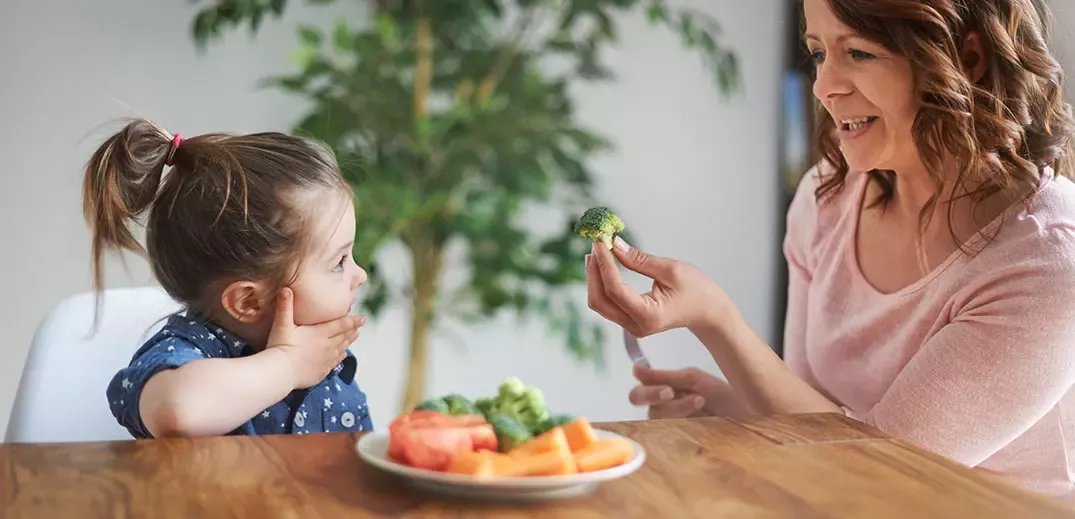
If your toddler refuses food, do this
Your job is to offer meals and snacks at predictable times. Your toddler’s job is to decide how much to eat from what you offer.
This reduces pressure, avoids power struggles, and helps your child listen to hunger cues.
Simple ways to reduce refusal
- Serve one “safe food” you know your child usually eats
- Keep portions small and allow second servings
- Offer new foods in tiny amounts beside familiar foods
- Avoid bargaining, threats, or forcing bites
- Keep screens off during meals when possible
Choking safety and texture tips
Toddlers are still learning to chew. Some foods need careful preparation.
High-risk foods and safer preparation
- Grapes-cut into quarters lengthwise
- Nuts- avoid whole nuts; use powder or paste in small amounts
- Raw hard vegetables- steam until soft
- Popcorn and hard candy- avoid
Always supervise snacks and keep your child seated while eating.
Added sugar in a toddler diet
Sweet foods can fit sometimes, but daily habits matter more than occasional treats.
Easy swaps that support toddler nutrition
- Plain curd + fruit instead of sweetened yogurt
- Water or milk instead of sugary drinks
- Homemade snacks sweetened with fruit
A quote worth keeping
“Provide structure and consistency, and your child will gradually build better eating habits.”
The Final note
You can create straightforward meal plans which require three essential elements. Your meal should include one energy food item and one protein food item and one fruit or vegetable. Use two-part snacks between meals. The schedule should remain constant while you stay composed during difficult eating times and you should concentrate on your weekly routines. Tell me which meal presents the greatest challenge to you and which food item you trust the most.
FAQs
Q1. How many snacks should you offer in toddler nutrition?
A. Most toddlers do well with 2 to 3 planned snacks daily along with meals, offered every 2 to 3 hours.
Q2. What should you include in snack ideas for a balanced diet toddler plan?
A. Aim for two parts: fruit/veg + protein, or grain/starchy food + protein.
Q3. What if your toddler refuses dinner?
A. It can be normal. Keep the routine, avoid pressure, and rely on the full-day pattern of healthy meals and planned snacks.
Q4. Is picky eating normal in a toddler diet?
A. Yes. Many toddlers go through phases where they accept fewer foods. With time and repeated exposure, variety often improves.
Q5. What is one habit that improves toddler nutrition quickly?
A. Replace frequent grazing with planned meal and snack times. This supports appetite and makes meals easier.
Disclaimer
This article is for informational purposes only and does not replace professional medical advice. Always consult your doctor or healthcare provider regarding pregnancy and delivery decisions.