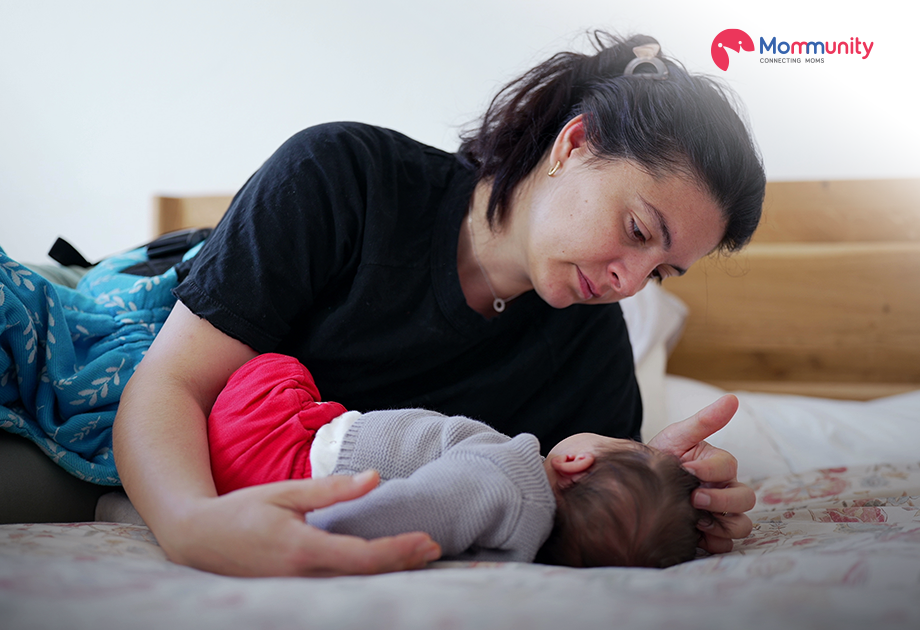
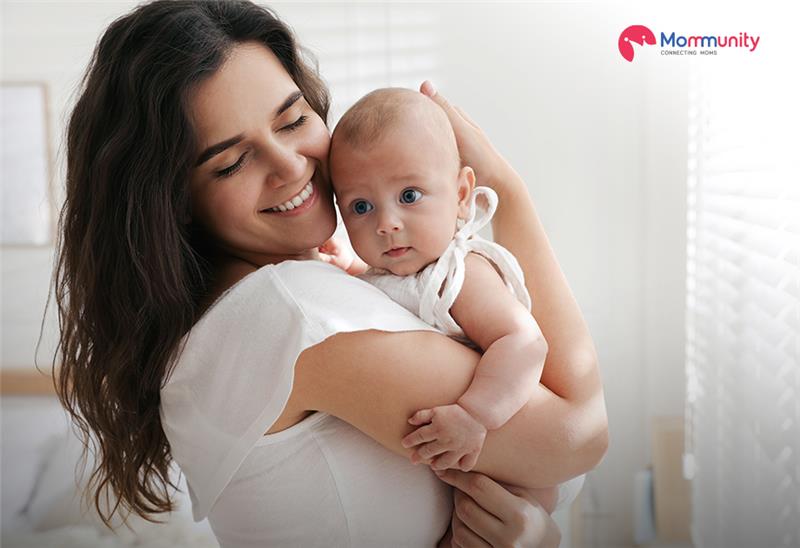
The initial month of your life with a baby brings you experiences that combine beauty and exhaustion with emotional confusion. You may be holding your newborn for hours and still wondering whether the bond with your baby is supposed to feel stronger by now.
Most parents do not recognize that this particular worry exists among all parents.
Some parents feel connected right away. Some do not. Some people develop protective feelings before they establish emotional connections. Some people cannot understand their emotions because they do not possess enough energy.
Everything remains normal because nothing remains wrong.
The good news is that newborn attachment usually grows in small, repeated moments. It often begins quietly through holding, feeding, soothing, eye contact, and responding to your baby again and again. The parent-baby bond develops through this process in actual life situations.

What Newborn Baby Bonding Really Looks Like
A lot of parents imagine early baby bonding as one big emotional moment.
In reality, it is often much simpler than that.
It can look like-
- holding your baby against your chest
- learning the difference between a hungry cry and a tired cry
- staring at your baby’s face during a feed
- feeling calmer when your baby finally settles on you
- noticing that you already know their little sounds better than anyone else
- Bonding does not always feel dramatic.
It is often built through repetition.
Why the First 30 Days Matter
Your baby is learning from you from the start. They are getting used to your smell, your voice, your touch, and the way you respond when they need comfort. At the same time, you are learning about your baby too. You are beginning to notice their cues, their preferences, their fussy times, and the small things that help them settle.
That is why the first month matters.
Not because you need to “get it perfect.”
These small daily moments help build familiarity, safety, and trust.
Hold Your Baby Close
.png "Hold your baby close")
One of the easiest ways to support newborn bonding is to keep your baby close in ordinary moments. You do not need a special plan for this. Closeness itself matters.
That can mean holding your baby after a feed, resting them on your chest, carrying them around the room, or sitting quietly with them when they are awake and calm.
Simple ways to do this-
- cuddle after feeds
- hold your baby while talking softly
- Carry your baby for a few minutes after changing
- rest together skin-to-skin when possible
The parent-baby bond often grows through this kind of quiet physical closeness.
Try Skin-to-Skin Contact

Skin-to-skin is one of the gentlest ways to support early baby bonding. It can help your baby feel safe and can help you slow down, too.
You can try it-
- after a feed
- after a bath
- during a fussy stretch
- when you want a calm reset
- during a quiet part of the day
You do not need long sessions.
A few quiet minutes can still matter.
Use Feeding as Connection Time

Whether you are breastfeeding, bottle-feeding, or doing both, feeding can become one of the strongest parts of newborn attachment.
That does not mean every feed will feel peaceful. Some feeds are rushed. Some are emotional. Some happen when you are barely awake. Still, feeding gives you many chances to build closeness.
During feeds, try to-
- hold your baby close
- Look at their face now and then
- notice their pauses and cues
- Keep the moment calm when possible
- let the feed feel like contact, not just a task
Bottle-feeding can support a strong parent-baby bond, too. Closeness is not limited to one feeding method.
Talk During Everyday Care

A lot of early baby bonding happens during the least glamorous parts of the day. Nappy changes, burping, dressing, rocking, and walking around at odd hours all count.
You do not need clever things to say. Your voice itself matters.
You can say simple things such as-
- I know, you are upset
- We are changing your nappy now
- There you are
- You were hungry, weren’t you
- Let’s get you comfortable
This helps your baby get used to your rhythm and your voice. It also helps you feel more connected during ordinary care.
Let Your Face Become Familiar
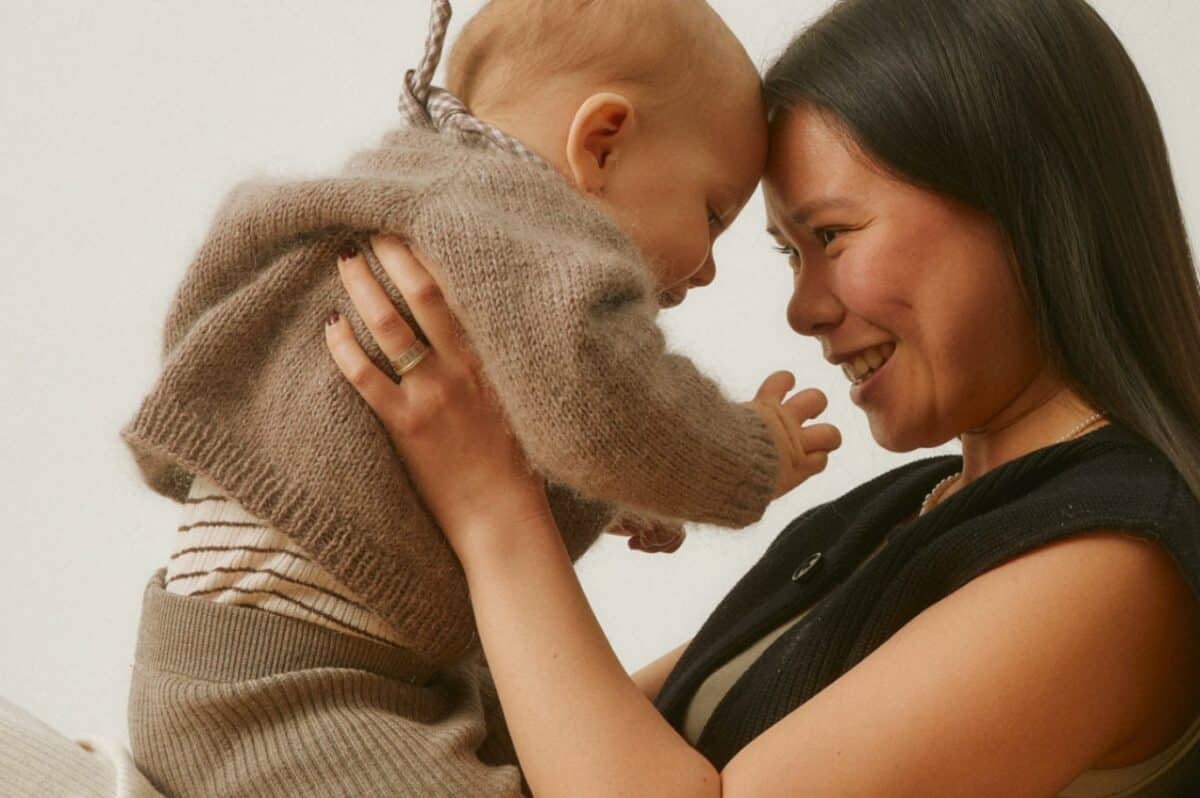
In the first few weeks, your baby sees best at close range. That means your face is one of the most important things they look at.
When your baby is awake and calm, try-
- soft eye contact
- a gentle smile
- quiet talking
- pausing so they can look at you
You do not need to entertain your baby all day. A few calm face-to-face moments are enough to support newborn bonding.
Learn Your Baby’s Cues

One of the most useful parts of early baby bonding is learning what your baby is trying to tell you before everything turns into crying.
This takes time. You are not expected to know it right away.
You may begin to notice cues such as-
- rooting when hungry
- sucking fists before a feed
- turning away when overstimulated
- going quiet before becoming overtired
- wriggling when uncomfortable
The more you notice these early signs, the easier it becomes to respond in a way that feels calmer for both of you.
That helps the parent-baby bond grow, too.
Let the Other Parent Build Their Own Rhythm
Newborn attachment is not only for one parent. Partners can build a strong bond through repeated care in their own way.
That can include-
- skin-to-skin time
- bottle feeds
- burping after feeds
- nappy changes
- rocking during fussy spells
- walking with the baby
- talking or singing softly
The bond does not have to look identical for both parents.
What matters is steady, caring contact.
Keep Bonding Simple
Many parents put pressure on themselves to create special bonding moments. In the first 30 days, simple usually works best.
Your newborn does not need complicated activities.
A very normal pattern is enough-
- hold
- feed
- talk
- cuddle
- settle
- rest
- repeat
That is what early baby bonding often looks like. Quiet, ordinary, repeated care.
Do Not Panic if the Feeling Is Slow
This matters a lot.
If you do not feel instantly attached, you are not doing anything wrong. If you feel tired more than emotional, that does not mean the bond is not growing. If you feel protective but not deeply connected yet, that is also a common experience.
A slower start can happen because-
- Birth was hard
- Recovery is taking a lot out of you
- You are not sleeping enough
- You feel anxious
- You are still adjusting
- You do not have enough support
Sometimes the bond is growing before you can clearly feel it.
Let Routine Moments Count
One mistake many parents make is assuming bonding only happens in special moments.
It does not.
These moments count too-
- bath time
- nappy changes
- feeding
- rocking at 3 am
- cuddling after crying
- sitting with your baby in a quiet room
The parent baby bond is often built inside the routine you are already living.
Take Care of Yourself Too
If you are deeply exhausted, numb, low, or emotionally stretched, bonding can feel harder. That does not mean you love your baby less. It may mean you need more care, too.
Sometimes, what helps newborn bonding most is not another tip.
It is-
- more sleep
- better food
- fewer visitors
- help with chores
- one uninterrupted shower
- someone taking the baby for an hour
- saying honestly that you are struggling
You matter in this story, too.
When to Ask for Help
If you feel persistently distant from your baby, or if you feel low, numb, angry, hopeless, or detached most of the time, please speak to your doctor.
It is especially important to ask for help if-
- The distance keeps growing
- You feel emotionally flat most days
- You feel constantly overwhelmed
- You are crying often and not improving
- You feel angry or hopeless
- You are struggling to cope
Support can make a real difference. Newborn bonding in the first 30 days is usually not about one huge feeling. It is about a steady presence. It is about showing up again and again in small ways that matter.
If you want to support early baby bonding, start here-
- hold your baby close
- try skin-to-skin
- feed with closeness
- talk during everyday care
- make eye contact
- Notice your baby’s cues
- let routine moments count
- Give yourself time
FAQs
Q1. Is it normal if newborn bonding does not feel instant
- Yes. Some parents feel close right away, and some do not. Bonding can grow slowly through daily care and repeated closeness.
Q2. What helps newborn attachment the most in the first month
- The most helpful things are usually the simplest-
- holding your baby close
- skin-to-skin contact
- feeding responsively
- talking during care
- noticing cues
- staying present
Q3. Can bottle-feeding still support a strong parent-baby bond
- Yes. Bottle-feeding can absolutely support a strong bond when feeds are calm, close, and responsive.
Q4. What if I feel more tired than bonded
- That is more common than many parents admit. The first month can be physically and emotionally draining. Bonding may still be growing, even if it does not feel dramatic yet.
Q5. When should I worry that the bond is not growing
- Speak to your doctor if you feel persistently distant from your baby, especially if you also feel low, numb, angry, or hopeless.
Disclaimer
This blog/article is intended for general informational and educational purposes only. It is not a substitute for professional medical advice, diagnosis, or treatment. Always consult your doctor or qualified healthcare provider with any questions about a medical condition, symptoms, or treatments.