
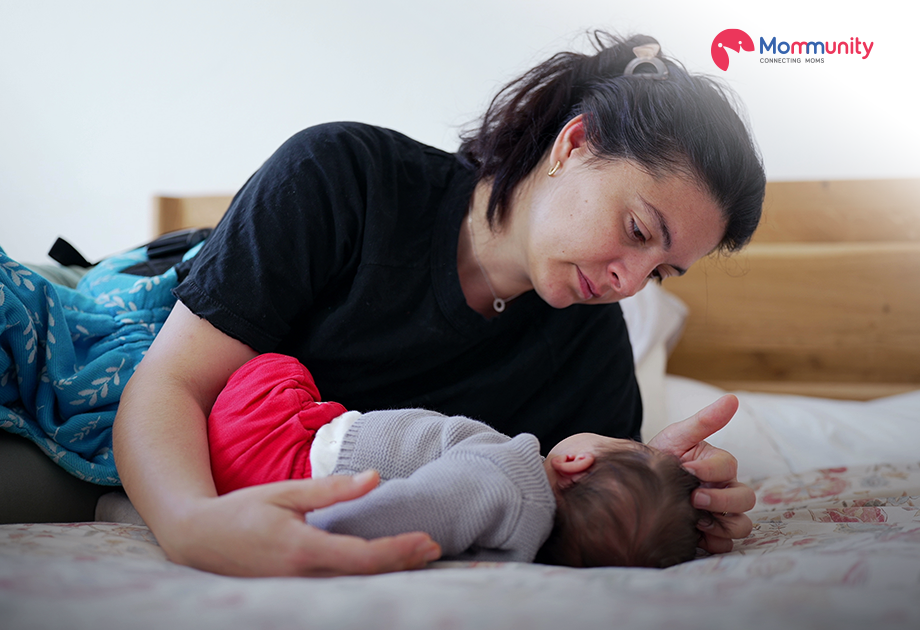
Newborn Won’t Sleep at Night – Why It Happens and What Helps
If your baby won’t sleep at night, it can make the whole house feel heavy. You feed, burp, rock, pat, and try again, only to realise very little has changed. At that point, it is easy to feel frustrated, guilty, and completely worn out. It is also easy to start wondering whether you are doing something wrong.
Most of the time, you are not.
A lot of newborn sleep problems are part of normal newborn life. Young babies wake often. They feed often. They need comfort often. That does not make the nights easier, but it does mean you are not alone, and it does not mean you have failed.
What is normal in the early weeks
In the beginning, baby sleep is rarely neat or predictable. Your baby may sleep in short stretches, wake often, nap unevenly, and want to be held more than you expected. That can still be completely normal.
What often falls under normal in the early weeks-
- waking every 1 to 3 hours
- sleeping more in the day than at night
- wanting to fall asleep in your arms
- needing frequent feeds
- becoming fussier in the evening
- waking soon after being put down
This is why so many parents search for infant sleep problems when the baby is simply very young and still adjusting to life outside the womb.
When sleep trouble may need medical help

There is a difference between a baby who wakes often and a baby who seems unwell. If your baby will not settle and something feels off, trust that instinct.
Please speak to a doctor urgently if your baby-
- has a fever
- is hard to wake
- is feeding much less than usual
- is breathing fast or struggling to breathe
- seems floppy or unusually weak
- has fewer wet nappies than expected
- feels very unlike themselves
That is not the moment to keep trying more settling tricks.
Why your baby may not be settling

When your baby won’t sleep at night, there is usually not one single reason. More often, it is a mix of small things that build up.
Common reasons include-
- hunger
- wind after feeds
- a wet or uncomfortable nappy
- being too warm or too cold
- overtiredness
- too much stimulation
- congestion
- wanting closeness
That last one matters more than people realise. Sometimes your baby is fed, changed, and burped, and still only wants to be near you. That can be hard when you are exhausted, but it is very common in the early weeks.
What actually helps tonight

You do not need ten different methods. You need a few practical things that work in real life.
Keep the night quiet and boring
At night, try to make everything feel simple and low-key. Babies slowly learn the difference between day and night, and the way you handle night wakes can help with that.
Try this-
- keep lights low
- use a soft voice
- avoid extra play
- keep changes quick if possible
- settle back to sleep without too much activity
This is some of the most useful sleep advice for new parents because it is simple enough to repeat every night.
Watch tired signs earlier
A very tired baby often has a harder time settling. This catches many parents off guard because it seems like being more tired should help. Often, it does the opposite.
Early tired signs can include-
- staring off
- yawning
- rubbing the face
- fussing that builds quickly
- turning away
- becoming quieter before crying starts
If you catch that earlier window, settling is often easier.
Use a short bedtime pattern
You do not need a long bedtime routine, especially not with a newborn. You just need a short pattern your baby begins to recognise.
A simple version-
- feed
- burp
- change if needed
- dim lights
- cuddle or rock
- into the cot or bassinet
That is enough. Short and repeatable usually works better than something complicated.
Check the basics before trying anything else

When you are tired, every wake-up can start to feel mysterious. It helps to come back to the obvious first.
Ask yourself-
- could they still be hungry
- do they need to burp
- is the nappy bothering them
- are they too warm
- have they been awake too long
- is their nose blocked
- do they just need a little more comfort
A lot of what looks like major newborn sleep problems is really just one small discomfort.
Do not keep a newborn awake longer on purpose

Many parents hear that if they keep the baby awake more in the day, the baby will sleep better at night. With a young newborn, that often backfires.
More tired does not always mean more sleep.
Sometimes it means-
- more crying
- harder settling
- shorter naps
- a rougher evening
If you want to know how to help a baby sleep better, start by avoiding overtiredness rather than pushing through it.
Help your baby learn day from night
This takes time, but you can gently support it.
During the day-
- open the curtains
- let in natural light
- talk and interact more
- keep daytime feeds a little more active
At night-
- keep things calm
- keep lights low
- avoid turning wake-ups into full events
These are small things, but repeated often enough, they can help.
Use soothing that suits your baby

There is no single soothing method that works for every baby. One baby settles with rocking. Another likes being held upright after a feed. Another calms down with white noise. Another wants stillness, not movement.
What may help your baby-
- gentle rocking
- holding upright after feeding
- soft humming
- white noise
- swaddling, if appropriate for your baby’s age and your doctor’s advice
- a calm dark room
Real sleep advice for new parents should leave room for that. Your baby is an individual, not a system to be cracked.
Safe sleep still matters on rough nights
This is especially important when you are very tired. Exhaustion makes unsafe sleep situations more likely, often by accident rather than choice.
Keep coming back to the basics-
- put your baby on their back for every sleep
- use a firm, flat sleep surface
- keep pillows, blankets, and soft toys out of the sleep space
- keep your baby in your room on their own sleep surface
If you feel yourself falling asleep while holding your baby on a chair or sofa, ask someone else to take over if that is possible. Deep tiredness changes judgment very quickly.
How to help baby sleep better over time

There is rarely one magic fix. Most babies sleep better over time because a few steady habits begin to work together.
What usually helps baby sleep better-
- noticing tired signs earlier
- keeping nights calm and quiet
- feeding well
- burping properly
- not stretching wake windows too far
- using the same short bedtime pattern
- keeping a consistent sleep space
- giving your baby time to mature
That is often the real answer to how to help baby sleep better.
Not perfection.
Not pressure.
Just repeated, simple habits.
What helps you survive the phase
A lot of conversations about infant sleep problems focus only on the baby and forget the parent who is running on almost nothing.
You matter here too.
What may help you-
- sleep in shifts if another adult is around
- hand over one early morning stretch
- ask someone else to hold the baby after a feed
- eat before you feel shaky
- drink water often
- stop trying to keep the house running normally
- say yes when someone offers useful help
You do not need to cope better.
You need support.
A few words you may need to hear
- If your baby won’t sleep at night, that does not mean you caused a bad habit.
- If you dread bedtime, that does not mean you are weak.
- If you have read too much advice and now feel more confused than before, that makes sense.
Some nights are hard because babies are hard at night.
That is not the same thing as doing something wrong.
When your baby won’t sleep at night, the answer is usually not one clever trick. It is a handful of steady basics that make the night a little more manageable.
Start here-
- keep nights dim and quiet
- respond before overtiredness builds too much
- use a short bedtime pattern
- check hunger, wind, comfort, and temperature
- keep sleep safe
- ask for help sooner
That is the kind of sleep advice for new parents that actually holds up when you are tired.
FAQs
Q1. Why does my baby won’t sleep at night even when they seem exhausted?
Babies can be tired and still struggle to settle. Hunger, wind, overstimulation, overtiredness, wanting closeness, and mixed-up day-night patterns can all play a part.
Common reasons include-
- hunger
- wind
- overtiredness
- discomfort
- needing closeness
- day-night confusion
Q2. Are newborn sleep problems always a sign of something serious?
No. Many newborn sleep problems are simply part of being a newborn. Frequent waking, short naps, and needing help to settle are common in the early weeks.
Call a doctor if your baby-
- has a fever
- is hard to wake
- feeds poorly
- seems unwell
- has breathing trouble
Q3. What is the best sleep advice for new parents in the first month?
Keep it simple.
What usually helps most-
- low lights at night
- calm feeds and changes
- early tired cues
- short bedtime patterns
- safe sleep
- realistic expectations
Q4. How can you help baby sleep better without doing anything extreme?
Start with comfort first.
Try this-
- feed well
- burp properly
- check the nappy
- avoid overtiredness
- keep nights quiet
- repeat the same short settling pattern
Q5. When should you call a doctor about infant sleep problems?
Please call if your baby-
- has a fever
- is hard to wake
- feeds much less
- seems to have breathing trouble
- feels very unlike themselves
Disclaimer
This blog/article is intended for general informational and educational purposes only. It is not a substitute for professional medical advice, diagnosis, or treatment. Always consult your doctor or qualified healthcare provider with any questions about a medical condition, symptoms, or treatments.