
Why Umbilical Cord Care Feels So Confusing at First
After your initial days of life, the umbilical cord stump develops into a small object that occupies all your mental capacity. Your observation shows you that the color has started to change. Your observation indicates that the skin should have a different level of moisture. Your observation shows you a small crust and an odor, which makes you doubt the cleanliness of every diaper change.
People commonly display that response. Parents observe the delicate appearance of the cord stump because they view it for the first time outside hospital educational materials. The majority of babies require simpler cord care procedures than what people usually think. You need to use the area for its intended purpose. You require an area that stays clean and dry plus you must wait for some time.
The first principle of umbilical cord care for newborn babies states that parents should understand established details about the cord stump behavior. Your task involves maintaining the area dry while preventing any dirt or irritation from occurring.
The short version
If you feel confused and want the basic rule, keep it this simple. For everyday umbilical cord care for newborn babies-
- Keep the stump dry
- Keep the diaper folded below it
- Do not pull it off
- Clean it only if something gets on it
- Stick to sponge baths until it falls off
- After it falls off, keep the belly button clean and dry until it finishes healing
- That really is enough for most newborns.
What normal healing looks like
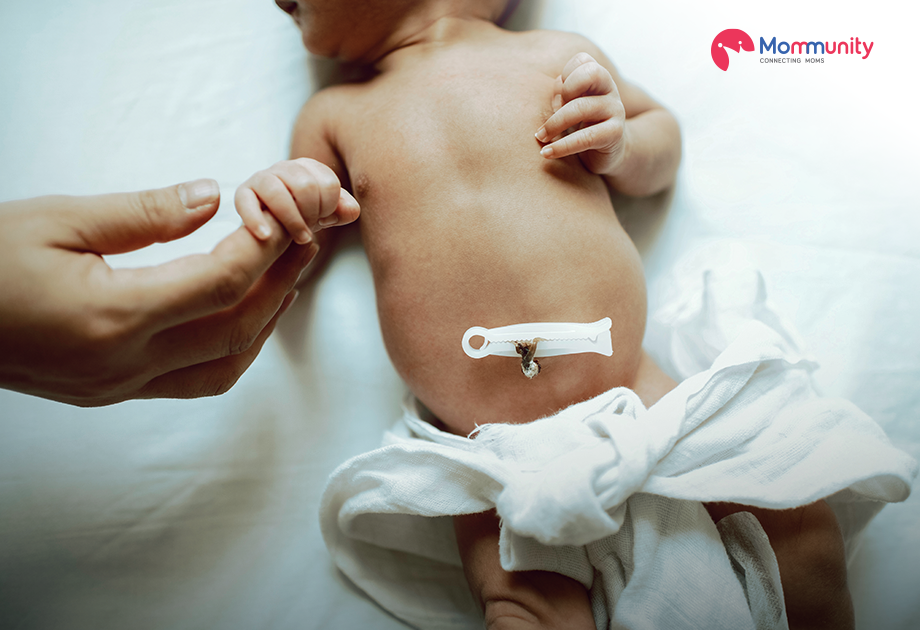
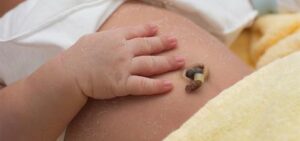
The stump does not stay the same from day to day. At first, it may look pale, yellowish, or slightly soft. Then it usually starts drying out. As it dries, it becomes darker, firmer, and more shriveled. Before it falls off, it may look brown, black, rough, or a little twisted. That can feel unsettling, but it is often part of normal healing.
A healthy umbilical cord falling off does not always look tidy. That is one reason so many parents feel anxious about it. They assume that if it looks strange, something must be wrong. Usually, what matters more is the skin around the cord. If the surrounding skin looks calm and your baby seems comfortable, that is often a much better sign than how neat the stump itself looks.
Things that can still be normal while the stump is healing-
- It’s getting darker before it falls off
- It looks dry and shriveled
- A tiny spot of blood when it loosens
- A slightly moist look right after it comes off
Why parents make mistakes with cord care

Most mistakes do not happen because parents are careless. They happen because parents are trying hard to do the right thing.
When you are unsure, you naturally want to do something. So you clean it again, look at it again, adjust the diaper again, or wonder if you should put something on it. In most cases, the stump does better when you do less.
That is the part many people do not hear clearly enough. Cord care is usually not about active treatment. It is about staying out of the way while the area dries and heals.
Mistake one
Cleaning it too often
This is one of the most common mistakes.
Many parents feel that if they keep cleaning the stump, they are preventing infection. In reality, frequent wiping can keep the area damp and slow down the drying process. If the stump looks clean, leave it alone.
If it gets dirty with stool, urine, or sticky discharge, then clean only the dirty part with plain water and dry it gently afterward. You do not need to keep cleaning a cord stump that is already clean.
Mistake two
Using too many products
This includes alcohol, powders, creams, oils, antiseptics, and home remedies.
A lot of older advice still gets repeated in families, especially around rubbing alcohol. Once parents start worrying, it becomes easy to try one thing after another. Usually, that only makes the routine more confusing.
The best way to clean umbilical cord care is usually the plainest one. If it gets dirty, use plain water. If it is clean, leave it alone. Unless your baby’s doctor has told you otherwise, the stump does not need extra products.
Mistake three
Letting the diaper cover the stump
This is easy to miss when you are tired and changing diapers quickly.
If the diaper sits over the stump, it can trap moisture and keep rubbing against the area. That can irritate the stump and keep it from drying as well as it should. A simple habit helps here. Fold the front of the diaper down so it stays below the stump. That keeps the area more open and drier.
Mistake four
Pulling it off when it looks loose
This happens more often than people admit.
The stump gets smaller and starts hanging by a thin bit of tissue, and parents feel tempted to “just help it along.” Try not to do that. Even if it looks almost off, let it separate by itself. Pulling it can cause bleeding and irritation.
Mistake five
Starting full baths too soon
A regular bath feels natural once you are getting into a routine with your baby, but soaking the stump before it falls off can keep it wet longer than necessary.
Until the stump comes off, sponge baths are usually the safer option. Once it does fall off, the belly button may still need a few more days to dry fully.
What proper cord care should actually look like
Parents often feel more relaxed once they realize how little is required.
A practical routine for newborn belly button care before the stump falls off usually looks like this-
- Check the stump during diaper changes
- Leave it alone if it looks clean
- Clean only the part that gets dirty
- Dry the area gently if you do clean it
- Keep the diaper below the stump
- Use sponge baths instead of soaking baths
- That is the full routine for most babies. It does not need extra steps to be good care.
What to do if the stump gets dirty
This is where many parents pause because “leave it alone” sounds easy until the stump gets soiled during a diaper change.
If the stump gets dirty-
- Use plain water on a soft cloth or cotton swab
- Wipe only the dirty part
- Do not scrub
- Dry the area gently afterward
That is usually enough. If it is already clean, there is no need to touch it.
What the belly button may look like after the cord falls off
The day the stump falls off, many parents expect the area to look finished. It usually does not.
The belly button after the umbilical cord falls off may still look slightly pink, a bit moist, or mildly raw in the center for a short time. That can still be part of normal healing. A tiny amount of blood or light moisture can also happen right after separation.
For newborn belly button care after the stump falls off, keep the routine just as simple-
- Keep the area clean
- Keep it dry
- Avoid rubbing it often
- Do not use powders, oils, or creams unless your doctor advises it
What matters most is whether the area slowly looks calmer and drier over the next few days.
When to call the doctor
This is the part most parents want clearly spelled out.
Call your doctor if you notice-
- Redness spreading onto the skin around the belly button
- Swelling around the base
- Yellow pus or thick discharge
- A bad smell along with redness or tenderness
- Fever
- Your baby is crying in pain when the area is touched
- Bleeding that keeps returning
- The stump was still attached after about three weeks
- A moist red lump that remains after the stump falls off
You do not need to wait until you feel completely certain something is wrong. If the area keeps looking worse instead of better, or your baby seems uncomfortable, it is worth asking.
What worries parents that can still be normal
Some things look more dramatic than they really are. That is why so many parents feel unsure even when healing is going fine.
These things can still happen during normal healing-
- The stump looks darker than expected
- The stump looks rough or shriveled
- A small spot of blood as it loosens
- Slight dampness after it falls off
- The belly button looks pink for a short time afterward
This is why the surrounding skin matters so much. A strange-looking stump is usually less worrying than red, swollen skin or a baby who seems unwell.
A simple daily reminder
When you are tired, the easiest routine is the one you can remember without effort.
Keep this in mind-
- Dry is better than damp
- Clean only when needed
- Fold the diaper below the stump
- Do not pull it off
- Use sponge baths until it falls
- After it falls, keep the belly button clean and dry until healed
That is enough for most babies.
The Final note
Cord care feels more stressful than it really is because the stump changes appearance every few days and sits in such a visible place. It is easy to keep checking it and wonder if you are missing something.
But for most babies, the safest approach is also the simplest one. Keep it dry. Clean it only if it gets dirty. Keep the diaper below it. Let it fall off on its own.
If you are still unsure about umbilical cord care for newborn babies, try not to answer that worry by adding more products or more steps. A smaller routine usually helps more.
If something about newborn belly button care confused you in the first week, share it in the comments. Another parent may be standing at the changing table tonight, wondering the same thing.
FAQs
Q1. What is the best way to clean the umbilical cord?
- The best way to clean umbilical cord care is to leave it alone unless it gets dirty. If urine, stool, or sticky discharge gets on it, clean only that area with plain water and dry it gently.
Q2. How long does a healthy umbilical cord take to fall off?
- A healthy umbilical cord falling off usually happens within one to three weeks. Some fall sooner, and some take a little longer.
Q3. Is a little blood normal when the cord falls off?
- Yes, a small spot of blood can happen when the stump separates. Bleeding that keeps coming back should be checked by a doctor.
Q4. What should the belly button look like after the cord falls off?
- The belly button after the umbilical cord falls off may look slightly pink, moist, or a little raw for a short time. It should slowly dry and heal over the next few days.
Q5. When should I worry about newborn belly button care?
- Worry less about the stump looking unusual and more about spreading redness, swelling, pus, bad smell, tenderness, fever, or a baby who seems in pain or unwell.
Q6. Can I use alcohol on the cord stump?
- Most babies do not need alcohol on the stump. A simple dry-care routine is usually enough unless your baby’s doctor gives different instructions.
Disclaimer
This blog/article is intended for general informational and educational purposes only. It is not a substitute for professional medical advice, diagnosis, or treatment. Always consult your doctor or qualified healthcare provider with any questions about a medical condition, symptoms, or treatments