
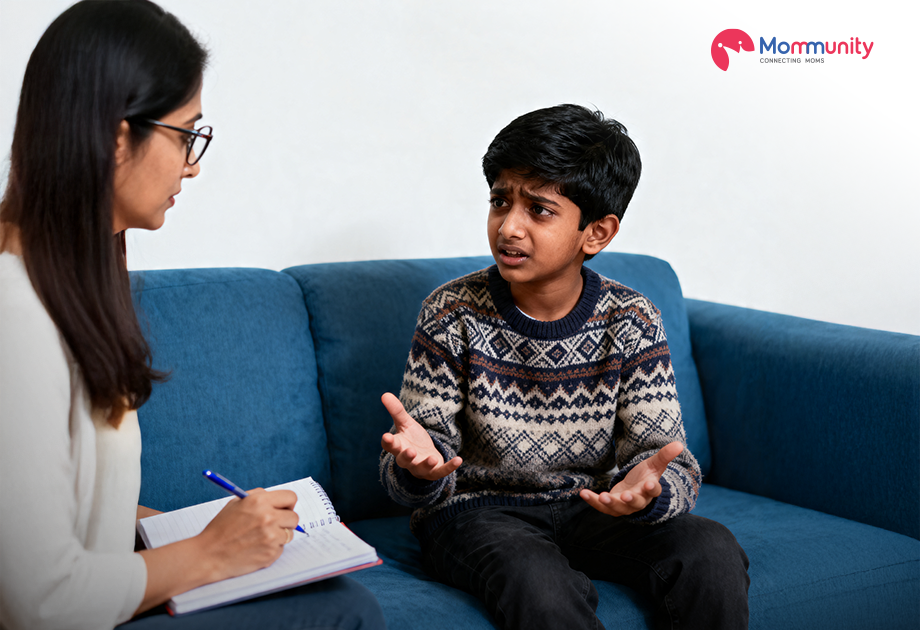
Has it ever happened with you that you just told your child to put their toys back on the rack and there was silence, with your child sitting or standing there without doing anything?
But two minutes later, when Maasi says the same thing, your child slowly, with a lazy
expression, starts cleaning up half-heartedly, but still does it.
Sounds familiar?
In Indian homes, such scenes play out daily and often leave parents wondering about child
behavior problems at home and questioning themselves.
● The same child who ignores you listens instantly to the teacher
● The same child who argues with you obeys the neighbour aunty
● The same child who resists bedtime sleeps when papa steps in
And that’s when the question hits hard, Why do children ignore parents at home? Or even more frustrating.child not listening first time what to do?
But here is the thing, before you dramatically question your parenting skills or assume they do not love you, let us unpack what is actually going on here because it is not just about not listening.
It is about relationship dynamics, emotional safety, and emotional decompression, and how your child feels with you in everyday moments.
Why Kids Behave Differently With Parents and Others?
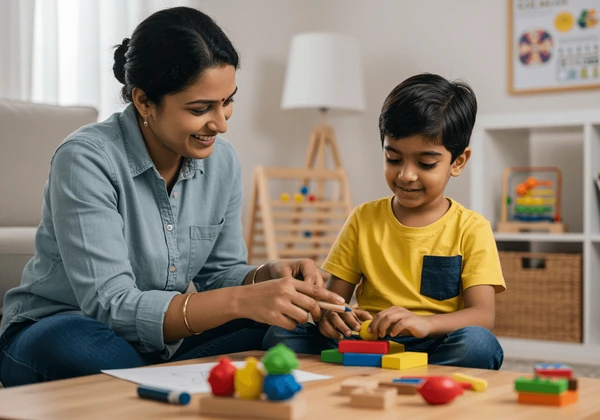
It is not disobedience but emotional familiarity.
Most parents do not realise that children behave very differently with the person they feel the safest with, and to say it clearly, your child feels that safety with you. Yes, you are that person, lucky you.
This is also the answer to a very common concern: why kids behave differently with parents and others.
You might have noticed at home
● They show their full emotions because they feel safe enough to let everything out.
● They test boundaries because they are trying to understand what is okay and what is
not.
● They release frustration because they know they can fall apart without feeling rejected.
● They push limits because they trust the relationship can handle it.
Because deep down, they know you are not going anywhere. You will not judge them or stop loving them.
No seriously! Think about it.
● At school, they “behave” because there are rules and consequences
● With relatives, they act “nice” because they want approval
● With you, they are their raw, unfiltered self
So when your child ignores you, it is not always defiance. It is often a comfort and emotional expression, because they feel safe enough to be completely themselves with you.
But if they feel safest with you, then why do they listen to others more?

Let us make sense of this together and see what is really happening beneath the surface.
Child psychologists explain this through a concept often described as “Familiarity Breeds
Emotional Expression”. In simple terms, the safer and more familiar a relationship feels, the more freely a child expresses their emotions without filtering.
This is also linked to emotional decompression. After holding in feelings and following rules
outside, children come home and release built-up emotions in a space where they feel secure.
Think of it like this. Even adults sometimes ignore messages in family groups. Familiarity
reduces urgency because we know the relationship is secure.
1. You are always available; others are not
Human behaviour naturally places more value on what feels limited. A teacher or another adult has limited interaction time, so their instructions carry more weight. A parent, on the other hand, is always present.
Your child subconsciously learns that you will repeat yourself like
“Mumma will say it again… I can delay.”
So there is no urgency to act immediately
This is why urgency drops and leads to situations where you feel stuck, figuring out what to do the first time a child doesn’t listen.
2. The More You Push, The Less They Listen
Truth be told, most of the parents believe that if they become stricter, their child will start
listening. But the reality is different.
When instructions are given with repeated pressure, a child’s brain can shift into a stress
response, often known as fight or flight mode.
In simple terms, the child hears your tone and senses pressure. The brain then moves away from thinking and problem-solving and shifts into reacting. In that state, listening naturally reduces.
This is why how to make kids listen without shouting becomes such an important skill, not just a parenting choice, because their brains are feeling overwhelmed at that moment.
3. You repeat instructions too often
When a child hears the same instruction multiple times without immediate consequence, the brain starts to filter it out. For instance,
“Pick up your toys.”
“Beta, I said, pick up your toys.”
“Last warning!”
“Are you even listening?”
By the 5th repetition, your words lose impact.
The brain learns that responding to the first request is not necessary. This is linked to a concept in psychology called habituation, where repeated stimuli lose their effect over time.
This happens because the brain is designed to save energy and focus only on what feels new, urgent, or important. When it hears the same instruction again and again without any immediate consequence, it starts categorising it as background information.
As a result, the brain no longer treats it as something that requires an immediate response, and the child learns that they can delay acting on it.
This is one of the biggest contributors to child behaviour problems at home, not because of the child, but because of the pattern
So, choose only what truly matters in the moment to help your child focus and take the
Instruction seriously.
4. Emotional reactions reduce authority
After a long day, it is completely natural for patience to run low and frustration to show. But children do not respond well to emotional intensity or a louder voice.
When your tone becomes reactive, for example, when your voice gets louder, your patience
wears thin, or your frustration starts to show, the child’s focus shifts.
Instead of hearing the instruction, they start reacting to your emotion. This reduces clarity and makes it less likely that they will follow through, because the message gets lost in the emotion.
So, your child is not rejecting you. They are reacting to your pattern.
It is not rejection. It is overwhelming.
5. Others give clear, firm instructions
Children respond better to short, firm, and consistent communication.
For example, a teacher is more likely to say, “Finish your work now,” calmly and directly. At home, it often sounds like, “Beta, please finish… why are you not finishing… I told you na…”
The instruction becomes longer and more emotional.
From a cognitive point of view, too many words can overwhelm a child’s ability to process
information, which leads to delay or no action at all. Clear and simple instructions are much
easier for the brain to understand and follow.
When you look at it this way, it is not that your child respects others more. It is that the
environment, communication style, and expectations are different, and children simply respond to what is clearer and more consistent.
And this difference is exactly why kids behave differently with parents and others.
So what your child is doing.
Your child is actually learning three important things in these moments.
● They are learning when to respond, based on how often an instruction is repeated and
whether there is any urgency attached to it.
● They are learning who to respond to, based on whose words are followed by clear and
consistent action.
● They are learning how serious a situation is, based on your tone, your consistency, and
what happens after you give an instruction.
This is not intentional disrespect.
This is behavioural conditioning, where your child is simply adapting to patterns they experience again and again.
Make Kids Listen Without Shouting

Now, let us move to what helps, especially if you are wondering:
● How to make kids listen without shouting
● How to discipline a child effectively
● Child not listening to what to do
1. Stop repeating, start pausing
Instead of saying, “Do this, do this, do this…” again and again, try a different approach.
Give the instruction once. Maintain eye contact. Then pause silently.
Silence creates a natural sense of expectation, while repetition reduces it. From a psychological perspective, when instructions are repeated, the brain learns that immediate action is not required. A pause, on the other hand, signals that you expect a response and gives the child space to act.
The next time your child ignores you, try this step-by-step.
● Sit at their level instead of calling out from another room.
● Gently touch their shoulder to get their attention.
● Speak in a calm and slow tone.
● Use fewer words.
For example, say, “Look at me. It is time to eat.”
This simple shift increases the chances of cooperation because the instruction is clear, direct, and easier for the child to process.
It directly addresses a child not listening the first time what to do, by changing the pattern of
approach.
2. Use the connection before the correction
Before giving instructions, focus on connecting with your child. What experts suggest is a simple shift from control to connection.
Here is how you can do it step by step.
● Make eye contact so your child knows you are speaking to them
● Use their name softly to get their attention instead of speaking from a distance
● If possible, give a small choice within your boundary
For example, “Do you want to wear blue shoes or black shoes?”
This works because giving a choice creates a sense of autonomy. When children feel they have some control, their resistance naturally reduces and improves cooperation, key to solving child behaviour problems at home.
Connection increases cooperation because it engages the child’s attention and emotional brain. When children feel seen and acknowledged, they are more likely to listen and respond positively.
3. Build long-term listening
Start a simple daily ritual of giving your child ten minutes of undivided attention. No phone and no instructions.
Use this time to play, talk, or simply be present with them.
● This matters because it fills the child’s emotional need for connection, which makes them
more receptive to guidance.
● It reduces attention-seeking behaviour, because the child already feels seen and valued
● It improves listening naturally, because a connected child is more likely to cooperate and
respond positively.
4. Create predictable routines (your secret weapon)
Children respond better when their day feels structured and predictable.
For example,
● Fixed clean-up time after play
● Fixed bedtime routine
● Fixed homework time
From a behavioural science perspective, routines reduce the need for decision-making and
reminders. The brain begins to associate certain times with certain actions, making cooperation more automatic.
5. Use the “When–Then” technique
Instead of using threats, shift to clear sequencing.
“If you do not clean, no TV” becomes
Say,“When toys are cleaned, then TV time starts.”
Or instead of saying, “Go study now,”
Say, “Let us see how fast you can finish before the timer ends.”
Why this works is simple. It turns the instruction into a challenge, which naturally engages the child. It also activates curiosity instead of resistance, making the task feel more interesting.
At the same time, it teaches cause and effect in a calm and predictable way and supports how to discipline a child effectively, without fear or shouting. The focus shifts away from punishment and towards understanding what needs to happen first, which makes it easier for the child to follow through.
6. Reduce emotional overreaction
Yes, we know, it is not easy, especially after a long day, but small changes make a big difference.
Lower your voice instead of raising it.
Slow your speech instead of speeding up.
Calm authority feels stronger than loud frustration. Neurologically, a calm tone helps the child stay regulated, which makes it easier for them to process and follow instructions.
This is the foundation of how to make kids listen without shouting.
7. Let natural consequences teach
Instead of constant reminders or scolding, allow real life to do some of the teaching.
If they refuse to pack their toys, the toys become unavailable for a day.
If they delay getting ready, they experience being late.
Natural consequences are powerful because they are directly linked to the child’s actions. This helps the brain form clear associations and encourages responsibility without repeated conflict.
What you need as a parent is a small mindset shift
 Instead of thinking, “My child does not respect me,” try shifting your perspective.
Think, “My child feels safest expressing themselves with me. Now I need to guide that
behaviour better, because this is a natural part of their developmental phase.”
This shift in thinking can significantly reduce frustration because, from a psychological
perspective, when parents interpret behaviour as a sign of safety rather than defiance, their emotional response becomes calmer and more regulated. This, in turn, helps the child feel secure while also making it easier for them to learn appropriate behaviour.
This shift reduces frustration and improves how you approach child behaviour problems at home.
Try this today to begin
Tonight, try just three changes.
● Give only one clear instruction
● Use eye contact and a calm voice
● Do not repeat the instruction immediately
Then observe what happens.
Small changes like these can lead to meaningful shifts in your child’s behaviour over time
because the brain learns through consistency and patterns.
The real understanding is this. Your child is not choosing others over you. They are
choosing comfort over compliance, and that comfort comes from you.
Your child listens to others just because they feel they have to. With you, they do not always respond the same way because they feel safe enough to delay or test boundaries.
So the goal is simple. Turn that comfort into cooperation by adding clear boundaries, calm
consistency, and meaningful connection, so your child feels both safe and guided at the same time.
You naturally solve:
● Why children ignore parents at home
● Why kids behave differently with parents and others
● How to make kids listen without shouting
And that is actually powerful, because it means change is possible.
The real question is simple. Will you turn that safety into a connection or into a conflict?