
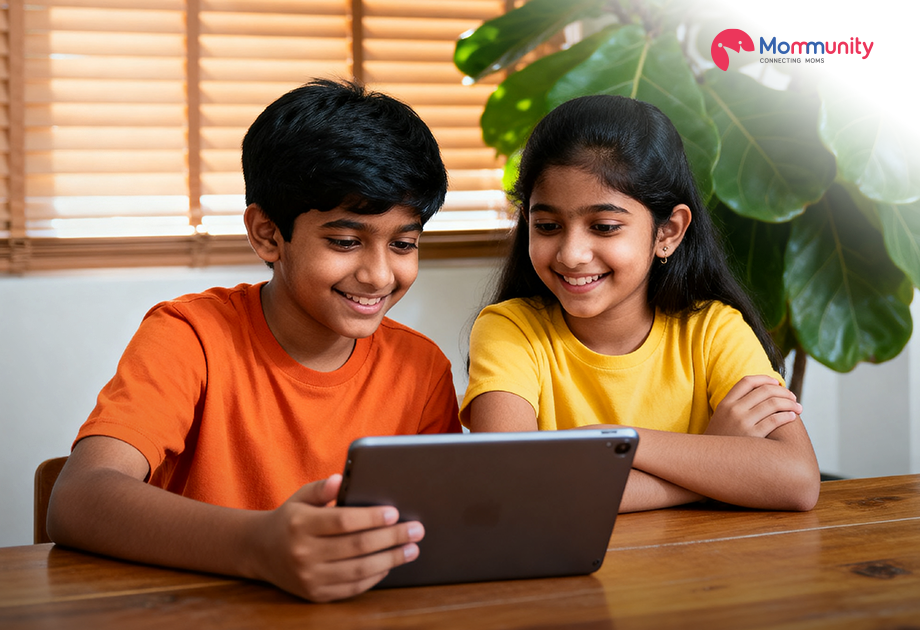
Picture a typical evening at home. You are in the kitchen, finishing dinner. The pressure cooker has just gone quiet and is slowly cooling down. In the background, the school WhatsApp group keeps buzzing about tomorrow’s project. Your child is sitting on the sofa, fully absorbed in a tablet.
This is what children’s screen time often looks like in real life. Calm. Quiet. Manageable.
Everything feels calm and peaceful, but the moment you say, “Bas, enough screen time,” the mood changes instantly. There is resistance. Sometimes tears. Sometimes anger. Sometimes a complete refusal to let go of the screen.
This is the moment many parents think,
“My child gets angry when the screen is taken away… is this addiction?”
And suddenly, it feels like the screen is the problem. But is it really? Because the real reaction is usually not just about the tablet being taken away.
It is about what was happening while the child was on it
- Maybe they were finally feeling engaged
- Maybe they were avoiding boredom
- Maybe they were calming themselves down in the only way they know how. Screens often step in quietly and do a lot of heavy lifting.
- They hold the child’s attention when no one else at home has the time or space to engage with them.
- They keep them occupied when the household is stretched thin, and everyone is busy trying to manage work, chores, and daily responsibilities.
- They help them settle when their emotions feel too big to handle, especially when they do not yet have the words or tools to calm themselves down. Maybe it is less about removing screens completely and more about noticing what your child was actually getting from them.
So when the screen is suddenly taken away, it is not just “screen time” that ends. It is that support, that comfort, that distraction they were leaning on, and that is where emotional dependency on screens in children slowly begins to form.
It is Not Just Screen Addiction, It is Emotional Dependency
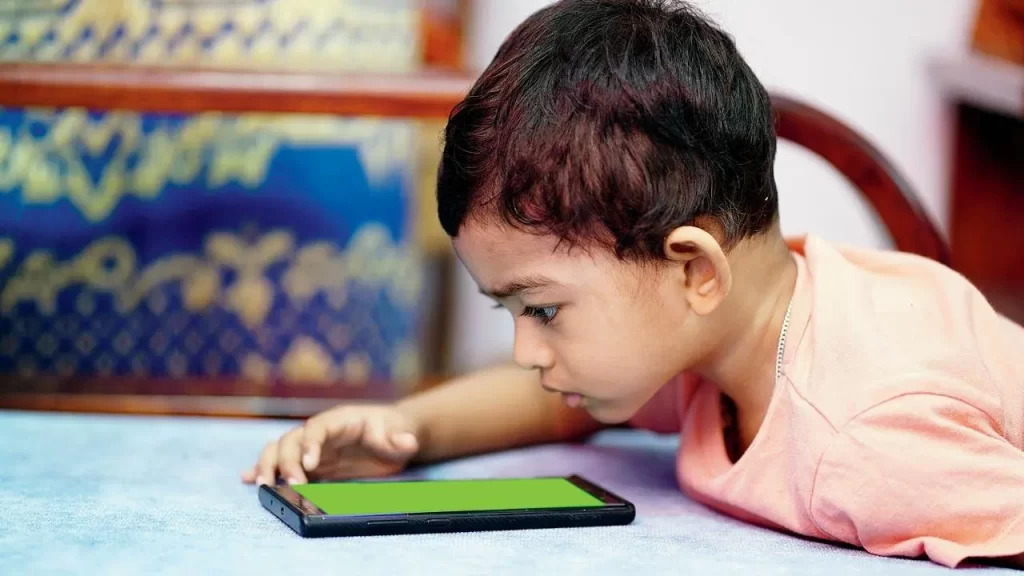
Children are not addicted to screens in the way adults usually think. From a neuropsychological point of view, something deeper is going on.
When a child watches videos or plays games, the brain releases dopamine. This is a chemical linked to pleasure and reward. It feels good, so naturally the child wants to go back to it again and again. But that is only one part of the story.
Many children slowly start using screens as a way to handle emotions they do not yet know how to deal with.
- Boredom
- Loneliness
- Anxiety
- That restless feeling when nothing feels interesting
Instead of sitting with these feelings or expressing them, the brain quietly learns a simple
pattern.
Uncomfortable feeling → open a screen → feel better immediately
And slowly, without anyone noticing, this becomes a daily habit. If we think about how homes used to function earlier, especially in many Indian families, the picture feels very different.
There was no smartphone glued to every hand. In many homes, even television had its own fixed timing like a strict teacher who only shows up at specific hours.
Children still found ways to stay busy. They went outside and played till their parents shouted from the balcony for the third time. They made games out of nothing. A stick became a sword, a box became a car, and suddenly the whole neighbourhood was a kingdom.
And honestly, nobody needed a productivity app to do homework. Somehow it just got done, usually after a small negotiation with parents and a lot of dramatic sighing.
Life today is faster in a very different way.
- Work does not always end at the office. It follows people home like an unpaid guest.
- Household chores feel like they multiply when nobody is looking.
- School messages arrive at the exact moment someone is trying to relax for five minutes.
- In many families where both parents are working, time together becomes something that is always planned but rarely fully happens. So even when everyone is under the same roof, they are often mentally occupied with different responsibilities like office calls, school messages, cooking, planning, exhaustion and the child is just trying to survive the silence in between all this. At that moment, the screen becomes very efficient. It does not ask for energy. It does not ask for conversation. It just works.
So this is not really about screen addiction.
It is more about emotional dependency that slowly builds up when a child’s need for attention, interaction, and simple presence does not always get enough room in the middle of your busy day.
Is it really true? Because my child looks happy while watching screens?

It does look like happiness. A calm face, full attention, sometimes even laughter, while watching videos or playing games. So it is natural to feel that everything is fine. But what we are often seeing is stimulation, not deep satisfaction. There is an important difference between the two.
Stimulation is quick. It is bright, fast, and constantly changing. It gives the brain a strong “feel good” signal in a very short time, but it does not last for long.
Satisfaction is different. It is slower. It comes from real experiences like playing with friends, solving something on their own, talking to someone, or simply being present in everyday life. It may not feel as intense in the moment, but it stays longer and builds emotional balance.
When a child spends a lot of time in highly stimulating screen content, a few changes often begin to show over time.
- Their attention span becomes shorter
- They find it harder to stay with slower activities
- Their tolerance for boredom reduces
- And their ability to calm themselves without a screen starts to weaken
This is why many parents notice something confusing. After screen time, the child does not always feel relaxed. Sometimes they feel more restless, more irritable, or easily upset. This happens because the brain becomes used to a very high level of stimulation. And when normal life feels quieter or slower in comparison, it becomes harder for the child to adjust immediately. So the child is not “unhappy” in the moment of watching screens. But the real question is what happens when the screen is switched off.
Then who is at fault? Should I blame myself or the screens?
It is a question that quietly sits in many parents’ minds, especially after a long day when everything feels like too much.
The truth is, parenting today does not look anything like it used to.
Earlier, as we discussed, children were rarely alone. They played outside till the streetlights came on. They grew up in joint families where there was always someone around to talk to, guide them, or simply keep them company. There was constant movement, noise, interaction, and natural stimulation built into everyday life.
Today, the reality feels very different.
- Many families are nuclear.
- Safety concerns make outdoor play more limited.
- Academic pressure starts early and stays constant.
- And open spaces to simply run, play, and explore are not always easy to find.
In all of this, something had to fill the gap, and screens quietly stepped in. Not as a mistake. Not as a failure. But as a very practical, very available solution. So this is not a space for blame, it is more a space for awareness. Because once we understand why screens have become such a natural part of a child’s routine, the focus slowly shifts from guilt to balance and from punishment to gentle adjustment.
The Real Missing Piece: Skills Children Are Not Building
The core issue is not just screen time. It is a few quieter skills that do not always get built in today’s childhood.
- Emotional coaching, where children are gently guided on how to understand and handle their feelings.
- Independent play skills, where they learn to stay engaged on their own without constant stimulation
- Tolerance for boredom, where they learn to sit with “nothing to do” without immediately escaping it
Usually, a child’s day often feels fully scheduled.
- School
- Tuition
- Homework
- Extra activities
Even the breaks in between are often filled quickly, sometimes unintentionally, just to keep things smooth and manageable at home.
In all of this, there is very little space left for something as simple as “doing nothing and when a gap appears, parents often wonder,
“My child is bored without a screen. What to do?”
But boredom is not a flaw in the system. It is actually an important part of growth.
In child psychology, boredom is seen as a healthy developmental space. It gives the brain time to slow down, wander, and create its own ideas. It helps children
- Build creativity by forcing the mind to imagine and create new games or stories when nothing is provided.
- Strengthen problem-solving skills by making the child figure out solutions during free, unstructured play.
- Develop emotional resilience by helping the child sit with boredom or discomfort instead of escaping it instantly.
- Learn how to entertain themselves without external input by encouraging the child to use imagination and surroundings instead of relying on screens.
When every moment of boredom is quickly replaced with a screen, the child does not really get the chance to build these internal skills.
Over time, this can make it harder for them to sit with quiet moments, use imagination freely, or manage discomfort without reaching for a device.
It is about what children miss learning when boredom no longer gets a chance to exist.
How to Reduce Screen Time for Kids (Without Resistance)
-
Replace, Do Not Just Remove

Source: KLAY

If screens are suddenly taken away, children often feel restless because their brains have already adjusted to quick and easy stimulation. Instead of only removing screens, replace them with simple activities like board games, helping in the kitchen, storytelling, or drawing. This is the first step in learning how to stop screen time without tantrums. These activities keep the child engaged more naturally. They also support better attention and self-control because the brain is actively involved in thinking, creating, and interacting instead of just receiving fast-moving content.
-
Teach Boredom, Do Not Eliminate It
When a child says, “I am bored without a screen, what to do?” It is tempting to immediately solve it, but allowing that moment to exist is important. Boredom is not empty time; it is actually when the brain starts to wander, imagine, and create new ideas. If children are always given instant entertainment, they miss this natural process. When they sit with boredom for a while, they slowly learn patience, imagination, and how to find their own ways of engaging themselves without depending on something external.
-
Create Micro Connections Daily
Children do not always need long conversations or big activities. Even small moments like talking during school drop off, sharing a laugh, or simply listening without correcting them make a strong impact. These reduce emotional dependency on screens in children naturally. It also helps the child feel emotionally secure. When a child feels understood and connected, their need to escape into screens reduces because they are already getting attention and comfort in real-life interactions.
-
Use Screens Intentionally, Not Emotionally
Instead of using screens as a quick distraction or reward, set clear and consistent timing, avoid screens during meals, and whenever possible, watch content together. When parents engage with what the child is watching, it turns a passive habit into a shared experience. This kind of structure supports better self-control in children because they slowly learn when and how to use the screen use is appropriate, rather than using it automatically whenever they feel bored or upset.
-
Bring Back Simple Traditional Play with a Modern Twist
Instead of asking, “How to reduce screen time for kids?”
Start asking, “What can replace it?”
Simple games like Ludo, Carrom, pretend play, or building forts with bedsheets may look old-fashioned, but they are extremely powerful for a child’s development. You can make them more engaging with small modern twists that children enjoy. In these activities, children create rules, solve small conflicts, use imagination, and stay engaged without external stimulation. This kind of play strengthens thinking skills, social understanding, and creativity because the child is actively involved in shaping the experience instead of just watching it.
-
Kitchen Challenge Games
When you are working in the kitchen, ask your child to help you in the kitchen in a playful way. For example, “Find three round things in the kitchen,” or “Help me make the funniest sandwich.” You can even turn it into a small guessing game with ingredients. This keeps them engaged because children enjoy feeling important and involved, and it naturally builds focus and patience while doing real tasks.
-
Story Building Game
Start a story with one line like “Once there was a lost puppy in our colony…” and ask your child to continue it. You can keep adding twists together. This works very well because it activates imagination and language skills, and children start thinking creatively instead of consuming ready-made stories.
-
Treasure Hunt at Home
Hide small everyday items like a spoon, toy, or pencil around the house and give simple clues like “Look near something that keeps things cold.” Children love searching, and this improves attention, problem-solving, and excitement without needing a screen.
-
Ludo With a Twist
While playing Ludo or Carrom, add small fun rules like “whoever loses tells a funny story” or “winner gets to choose tomorrow’s snack.” This keeps traditional games exciting and also teaches patience, turn-taking, and handling winning and losing.
-
“Boredom Box” Activity
Keep a box at home with simple ideas written on chits like “draw your dream house,” “build a fort with bedsheets,” “act like a shopkeeper,” or “make a comic strip.” When the child says they are bored, they pick one chit and do it. This slowly trains them to move from boredom to creativity without screens.
-
Daily Mini Role Play
Give them small roles like teacher, doctor, shopkeeper, or chef for 20 minutes. Where siblings can participate. Children love pretending, and this builds confidence, communication skills, and imagination.
-
Walk and Observe Game
During evening walks or even inside the house balcony, ask simple questions like “How many red things can you spot?” or “What is one new thing you noticed today?” This builds awareness and slows down the mind in a very natural way.
The goal is not to remove screens completely. That is neither practical nor realistic in today’s world. The real goal is to raise a child who has balance and control in their relationship with screens.
- A child who can spend time without screens without feeling restless
- A child who can sit with boredom without immediately needing a distraction
- A child who can slowly learn to understand and regulate their emotions
That is what healthy development looks like.
Experts also point out that children who feel emotionally connected to their parents are less likely to depend heavily on screens for comfort. When there is regular warmth, attention, and small moments of genuine presence in everyday life, the child naturally feels more secure and grounded. This emotional security helps them manage their feelings better and reduces the need to constantly escape into digital distractions.
So the real question is not “How do I remove screens?”
The real question is “What is my child seeking when they reach for the screen?”
Answer that, and everything changes.
FAQs
-
How much screen time is okay for children?
A. For children below 2 years, screen time should be avoided except for video calling. For ages 2 to 5, it should be limited to about 1 hour per day of high-quality content. For older children, it should be structured and balanced with study, sleep, outdoor play, and family interaction.
-
What is emotional dependency on screens in children?
A. Emotional dependency on screens in children happens when they start using screens not just for fun, but to manage feelings like boredom, stress, or loneliness. This develops because screens give quick comfort and distraction, making the child rely on them whenever they feel uneasy. Over time, this becomes a habit. The way to handle it is by slowly building emotional skills through conversation, play, and real-life connections instead of instant screen use.
3. How to stop screen time without tantrums?
A. Stopping screen time without tantrums requires a gradual and structured approach instead of sudden restrictions. Tantrums often happen when there is no clear transition or alternative after the screen is removed. Creating a routine, giving time warnings, and replacing screens with engaging activities help the child adjust better. Consistency and calm responses from parents also make a big difference.
-
Why does a child get angry when the screen is taken away?
A. When a child gets angry when the screen is taken away, it is usually because the screen was meeting an emotional or mental need, like engagement or comfort. Screens release dopamine, so stopping them suddenly feels like losing something important. This creates frustration or resistance. Giving warnings, transitioning slowly, and offering another activity can help reduce this reaction.
-
My child is bored without a screen. What to do?
A. When a child says they are bored without a screen, it usually means they are not used to unstructured time. Boredom is actually important because it helps develop creativity, problem-solving, and independence. Instead of fixing it immediately, allow the child some time to figure things out, while gently offering ideas like drawing, storytelling, or simple games. Over time, they learn to engage themselves without screens.