
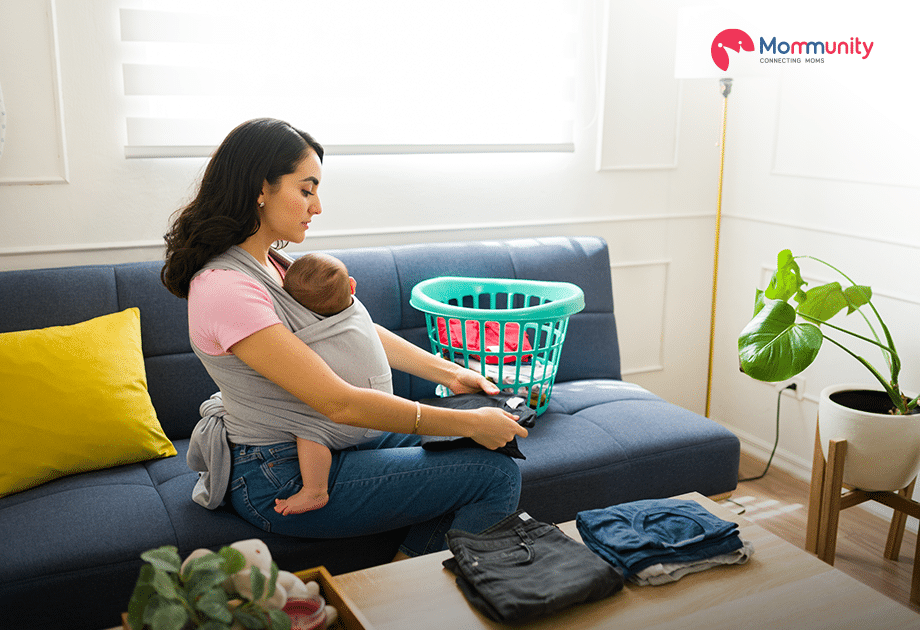
Why the House Feels Unmanageable After Baby Arrives
When housework with a newborn feels impossible, that does not mean you are falling behind. In most homes, the first weeks after birth are a mix of physical recovery, broken sleep, feeding, laundry, and a baby who needs your hands more than your to-do list does. ACOG describes the postpartum period as a time that can include lack of sleep, fatigue, and pain, and notes that many people feel very tired after birth and may need weeks to regain strength and energy, with recovery often taking longer after a cesarean birth.
There is data behind that exhaustion too. In a large population study, 38.8% of women reported fatigue or severe tiredness at 10 days postpartum, 27.1% at one month, and 11.4% at three months. The same study found stronger links between fatigue and depression, anxiety, and sleep problems.
So yes, balancing chores with a newborn can feel far harder than anyone warned you. The better goal is not keeping the house perfect. The better goal is keeping your home functional while you recover and care for your baby.
Quick answer
The best way to manage housework with a baby is to lower the standard for a while, protect rest first, shrink chores into short blocks, ask for task-specific help, and focus on the few jobs that matter most each day. If a task does not protect hygiene, feeding, sleep, or basic comfort, it can usually wait. That approach fits with postpartum guidance that places recovery, support, and regular follow-up at the centre of the first weeks after birth.
Why housework feels harder after birth
A newborn does not arrive with predictable work hours. Feeding, burping, changing, settling, and short sleep stretches break your day into small pieces. Your body may still be healing. If you had stitches, blood loss, a long labour, or a cesarean birth, routine tasks can take more out of you than they used to. ACOG says the “fourth trimester” can bring lack of sleep, fatigue, pain, and many other challenges, which is exactly why old household expectations stop working.
There is another layer too. Housework is not only physical. It is mental. You are tracking feeds, burps, naps, laundry, diapers, medicines, appointments, and your own recovery. WHO’s postnatal care guidance describes a positive postnatal experience as one in which women, newborns, partners, parents, caregivers, and families receive information, reassurance, and support in a consistent manner. In plain terms, new mothers were never meant to carry this period alone.
The first shift that helps most
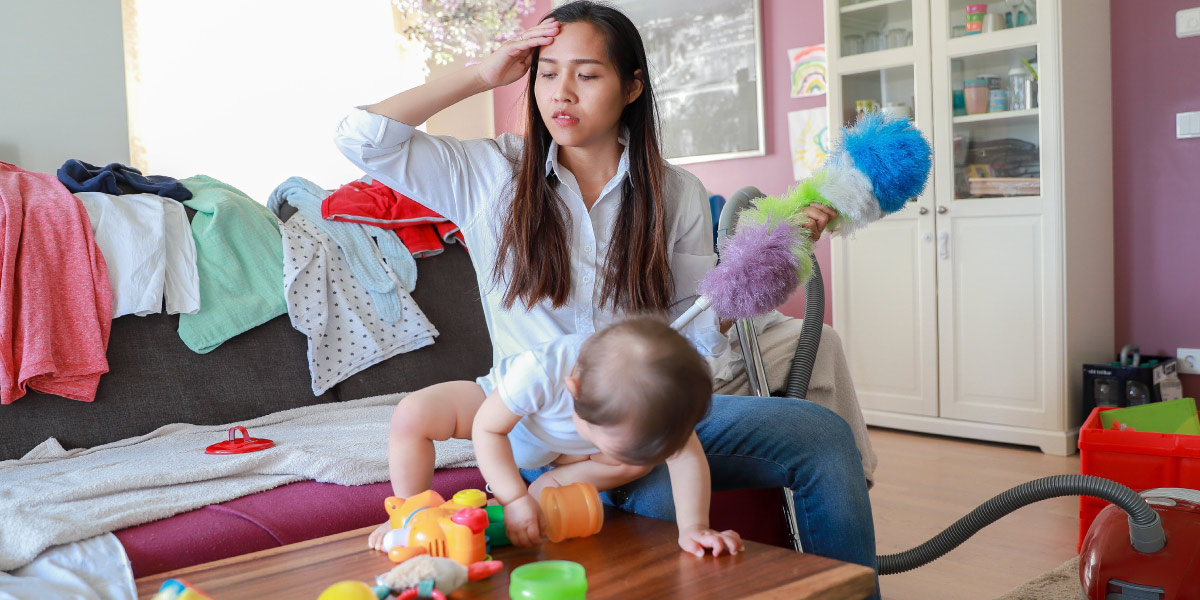
The most useful reset is this one
Clean enough is enough
In the newborn phase, the goal is not a beautiful home. The goal is a home that is safe, stocked, and reasonably calm.
That usually means:
- Clean bottles or feeding supplies
- Clean clothes for the baby and for you
- A usable bathroom
- A clear place to change and feed the baby
- Food that is easy to eat
- A bed or resting spot you can return to quickly
Everything else is secondary for a while.
Johns Hopkins sleep specialists advise new parents to choose sleep over chores when possible, and Healthy Children suggests that one of the most useful gifts for a new parent is help with laundry, dishes, and meals so they can rest. That gives you a good clue about what matters most in this stage.
What actually works at home
1. Use a three-level chore list

This is one of the best new mom household tips because it removes decision fatigue.
Level one
Daily essentials
- Wash bottles or pump parts
- Put dirty clothes in one place
- Clear one surface for feeding or changing
- Take out trash if it contains diapers or food waste
Level two
Helpful, but not urgent
- One laundry load
- Quick kitchen reset
- Refill water bottles
- Restock diapers or wipes
Level three
Can wait
- Folding clothes
- Deep cleaning
- Organizing drawers
- Matching socks
- Guest-ready cleaning
When you are tired, do level one first. If you still have energy, move to level two. Leave level three for another day.
2. Work in ten-minute windows

Long chore sessions usually fail in the newborn stage. Ten minutes works better.
Try one small job during one calm stretch:
- Start one laundry load
- Empty part of the dishwasher
- Wipe the bathroom sink
- Pack the diaper station
- Chop fruit or reheat food
This is a better form of time management for new mothers than waiting for a perfect free hour. A newborn day rarely gives you that.
3. Stop folding most baby clothes

This sounds small, but it saves real time.
Use baskets, drawers, or open bins for:
- Vests
- Sleepsuits
- Bibs
- Burp cloths
- Towels
If it is clean and easy to find, that is enough. There is no prize for beautifully folded newborn laundry.
4. Build stations in the places where you already sit

Keep essentials in the spots where most of your day happens.
A feeding station can hold:
- Water bottle
- Phone charger
- Nappies
- Wipes
- Burp cloth
- Snack
- Nipple cream or hand cream if needed
- A spare babygrow
A small basket in two or three rooms can cut down pointless walking when you are already tired.
5. Protect one real rest block every day

Rest is not a luxury after birth. It is part of recovery.
You may not get a long nap. That is fine. Aim for one daily block where you are off duty for 30 to 60 minutes if someone else can hold the baby, take the pram out, handle the older sibling, or watch the bassinet. HealthyChildren suggests exactly this kind of support, including a baby break, sibling care, fluff and fold, and meal help, so parents can rest instead of spending that time on more chores.
6. Ask for help with tasks, not vague offers
:max_bytes(150000):strip_icc()/Parents-GettyImages-944329414-dca2ee42af25497e8143372c233d92a8.jpg "Ask for help with tasks, not vague offers")
When people say, “Tell me if you need anything,” many new mothers freeze because the answer is too broad.
Try these instead:
- Please bring dinner for tonight
- Please run one laundry load and leave it in the basket
- Please hold the baby for 30 minutes while I shower and lie down
- Please pick up milk, bread, and diapers
- Please wash the bottles in the sink
Specific requests are easier for other people to do and easier for you to accept. Johns Hopkins also advises asking friends and family for concrete help with groceries, sweeping, and holding the baby while you nap.
7. Share duties by shift

If you have a partner, avoid the pattern where one person carries the mental load and the other “helps” only when asked.
A better system is to divide time or task ownership.
For example:
Morning block
One person handles baby care after the first early feed while the other sleeps.
Evening block
One person does dinner and bottle washing while the other settles the baby.
Night block
If feeds can be shared, take turns being fully responsible for a set stretch. Johns Hopkins recommends sharing nighttime baby duties where possible so one parent gets a longer sleep block.
8. Cut food effort before you cut sleep

In the newborn phase, simple meals are a smart move.
Use:
- Cook once, eat twice
- Pre-cut fruit
- Curd, eggs, oats, soups, khichdi, dal, toast, smoothies
- Grocery delivery where possible
- Paper plates for a few days if cleanup is becoming the last straw
HealthyChildren points out that meal help can open a window in the day when parents can finally sit down and rest.
9. Be careful with “sleep when the baby sleeps”

That line can irritate many parents because newborn sleep is not always predictable, and some babies sleep only on a person.
A better version is this
Rest when a rest chance appears
Sometimes that will be a nap. Sometimes it will be lying down with your eyes closed while someone else watches the baby. Sometimes it will be sitting with a snack and doing nothing for fifteen minutes.
Johns Hopkins advises sleep while the baby sleeps when you can, and also says to skip household chores in favour of sleep. That does not mean every nap must become your nap. It means sleep deserves first claim on your limited energy more often than laundry does.
10. Watch the line between normal exhaustion and a problem

Feeling tired, stretched, and behind on chores is common after birth. Feeling persistently sad, very anxious, angry, numb, or unable to manage daily life needs attention.
CDC says postpartum depression is more intense and longer-lasting than baby blues and may include crying more often than usual, feeling angry, feeling distant from your baby, or doubting your ability to care for the baby. ACOG recommends that all women have contact with their postpartum care provider within the first three weeks after birth, followed by ongoing care as needed and a comprehensive visit by no later than 12 weeks.
If chores feel impossible because you are physically unwell, short of breath, in severe pain, unable to sleep even when given the chance, or emotionally unsteady in a way that worries you, call your doctor sooner rather than later. That is care, not failure.
A simple daily plan you can actually use
Here is one gentle version.
Morning
- Feed yourself
- Feed the baby
- Open curtains
- Start one load of laundry if needed
- Sit down again
Midday
- Eat something with protein
- Do one ten-minute reset
- Rest if another adult can take over
Evening
- Clear one surface
- Wash only what you need for the next feed or the next morning
- Set out baby clothes, your clothes, diapers, and water
That is enough for many days.
The final note
You do not need better discipline to handle housework with a newborn. You need a kinder system. In the early weeks, the homes that cope best are rarely the homes doing the most. They are the homes that lower the standard, protect sleep, repeat simple routines, and let other people carry part of the load.
If you are trying to manage housework with a baby, start smaller than you think. One load. One basket. One meal shortcut. One rest block. That is how order slowly returns.
Tell us in the comments what helped most in your home after birth. Your routine may help another new mother who is having a hard week.
FAQs
Q1. How do you manage housework with a newborn when the baby wants to be held most of the day?
A. Use short chore windows, keep supplies in multiple rooms, and ask another adult for one protected rest block or one chore block each day. If the baby settles only on a person, reduce chores to essentials and drop folding, organizing, and deep cleaning for now.
Q2. What chores should new mothers prioritize first
A. Start with feeding supplies, basic laundry, a usable bathroom, food for yourself, and one clean surface for baby care. These jobs protect hygiene, comfort, and daily functioning. Most other chores can wait for a later stage.
Q3. Is it normal to feel that balancing chores with a newborn is impossible?
A. Yes. Early postpartum recovery often includes fatigue, pain, interrupted sleep, and constant hands-on care. ACOG and postpartum fatigue research both support the fact that tiredness in the first weeks after birth is common and can remain significant beyond the first month.
Q4. Should you use every baby nap for chores?
A.No. Rest should stay high on the list. Johns Hopkins advises new parents to choose sleep over chores when possible because sleep loss is a major part of the newborn period.
Q5. When should you ask for help?
A. Ask early, and ask clearly. Help is most useful when it removes an actual task from your plate, such as laundry, meals, groceries, bottle washing, or holding the baby while you rest. The AAP parent guidance on support for sleep-deprived new parents highlights these exact forms of help.
Q6. When should you call a doctor?
A. Call if exhaustion feels extreme, if you are not coping, if you have persistent sadness or anxiety, or if you feel distant from your baby or doubtful about your ability to care for them. CDC says postpartum depression is treatable, and ACOG recommends early postpartum contact with your care provider.
Disclaimer
This blog/article is intended for general informational and educational purposes only. It is not a substitute for professional medical advice, diagnosis, or treatment. Always consult your doctor or qualified healthcare provider with any questions about a medical condition, symptoms, or treatments.