
How to Tell If Your Toddler’s Speech Is a Delay or Part of Normal Variation
If you are here, chances are you have already noticed something.
Maybe your toddler uses fewer words than other children the same age. Maybe they point more than they speak. Maybe family members keep telling you not to worry, but the concern has stayed with you anyway. That is often how this starts. Quietly.
The difficult part is that both things can be true. Some children are simply later talkers and still move forward well. Some children need extra support. The real question is not whether your child is the same as every other child. The real question is whether communication is developing in a healthy direction.
When parents worry about speech delay in toddlers, they usually do not need to panic. They need a clear way to look at signs, milestones, and next steps.
Quick answer
Some variation in talking is normal. But it is worth looking more closely if your child has very few words for their age, limited gestures, weak understanding, no word combinations by around age two, or loss of skills they already had.
A helpful first step is to look at the full communication picture, not just word count.
Signs to watch
These signs do not confirm a diagnosis on their own, but they do deserve attention-
- very few words for age
- limited pointing, waving, or showing
- weak response to simple language
- no two-word combinations by around age two
- speech concerns, along with social or play concerns
- loss of words, sounds, or communication skills
That is where the difference between normal speech and language development and a possible delay starts becoming clearer.
What parents usually mean by speech delay
Most parents use the word “speech” for any talking concern, but there are two parts to this.
Speech
Speech is how your child says sounds and words. It includes clarity, pronunciation, and sound production.
Language
Language is broader. It includes understanding words, using gestures, following directions, expressing needs, and connecting sounds or words with meaning.
This matters because a child may have difficulty in one area more than another. A toddler may say a few words but still understand a lot, point clearly, follow routines, and try to connect. Another toddler may have fewer words and also struggle with understanding or interaction. Those two situations do not mean the same thing.
That is why normal development of speech and language should always be looked at as a full communication pattern.
What normal speech and language development can look like
There is no perfect age at which every child does the same thing. Children move at different speeds. Still, there are broad patterns that help you understand normal speech and language development.
Around 12 months
Many children are babbling with purpose, responding to familiar voices, using gestures, and trying one or two early words.
Around 18 months
Many toddlers are trying more words, pointing to what they want, showing interest in objects, and understanding simple routines or requests.
Around 2 years
A lot of children begin using a wider vocabulary and start combining words into short phrases.
Around 3 years
Speech is often easier to understand, and children usually communicate more clearly in short sentences.
The bigger point is not whether your child hits every single marker on a precise date. The bigger point is whether communication is growing over time.
When it may be more than normal variation
Some children talk later and still catch up well. That happens. But some signs suggest a child may need more than time.
Pay closer attention if you notice the following.
Limited gestures
If your child rarely points, waves, reaches up to be picked up, or tries to show you things, that matters. Communication starts well before clear speech.
Weak understanding
If your child often seems not to understand familiar words, simple requests, or common routines, that matters just as much as spoken language.
Very few words by the second year
Children vary, but very limited spoken words by this stage should not be brushed off too quickly.
No two-word combinations around age two
Many toddlers begin combining words around this stage. If that is not happening, it is worth asking about.
Loss of skills
If your child stops using words, gestures, or communication skills they had before, do not wait to discuss it.
Speech concerns with broader differences
If talking concerns come with low imitation, unusual play, limited eye contact, or a weaker social connection, it is wise to look at the bigger developmental picture.
A common speech delay in toddlers causes
Parents often blame themselves first. They wonder if they did not talk enough, read enough, or do enough. In most cases, guilt does not help, and it is usually not accurate.
There are several possible causes of speech delay in toddlers. These may include-
- hearing difficulties
- late language emergence
- developmental language disorder
- autism or other developmental differences
- speech sound difficulties
- broader developmental delays
This is one reason hearing should always be taken seriously when language feels delayed. A child who is not hearing clearly may also have a harder time building language.
Why understanding matters as much as talking
A lot of parents count words first because words are easy to measure. But spoken words are only one piece of communication.
Ask yourself-
- Does your child seem to understand familiar words?
- Do they follow simple directions sometimes?
- Do they point to ask or show?
- Do they try to copy sounds or actions?
- Do they bring objects to you for attention?
A toddler with few spoken words but strong understanding and active communication attempts may be on a different path from a toddler who struggles across several areas.
That is why normal development of speech and language is not just about how many words a child says. It is about how they connect, respond, and communicate overall.
Speech milestones parents often look for
Milestones can be helpful when used as a guide, not a source of panic.
Here are some simple toddler speech milestones parents often watch-
- babbling and gestures in the first year
- a few words around the first birthday
- more clear attempts to communicate by 18 months
- growing vocabulary and phrase attempts by age two
- clearer speech and short sentences by age three
If several speech and language milestones seem far off at once, that is usually a stronger reason to check in than one small difference alone.
Parenting tips for speech delay that actually help
If you are worried, waiting in silence rarely feels good. The good news is that daily interaction can support communication in simple ways. These parenting tips for speech delay are realistic and useful at home.
Talk during routines
Describe what you are doing during dressing, meals, bath time, or play. Keep it simple. Repeat familiar words often.
Follow your child’s focus
If your child is looking at a ball, talk about the ball. If they are watching a dog, talk about the dog. Language lands better when it connects to what already has their attention.
Use short, clear phrases
Long explanations are not necessary. Small phrases are easier for toddlers to absorb.
Pause and wait
Give your child a chance to respond with a look, sound, gesture, or word. Many adults rush to fill the silence too quickly.
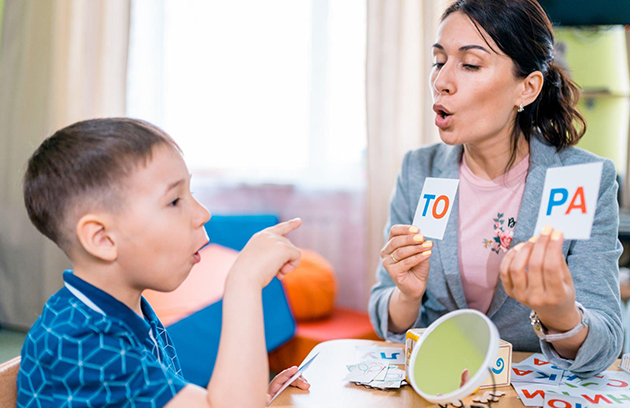
Read picture books together
You do not need to read every word exactly. Point, label, react, and let your child join in however they can.
Imitate your child sometimes
If your child makes a sound or action, copy it. That can build connections and make communication feel easier.
Reduce constant background noise
Too much screen noise or audio running in the background can make interaction harder. Face-to-face attention is more useful.
What not to do
Worry can push parents into habits that feel active but do not help much.
Try to avoid-
- constant comparison with other children
- Repeatedly pressuring your child to “say it properly.”
- Assuming every late talker will automatically catch up
- Waiting too long when several signs are present
- Relying on screens to teach communication
Children usually respond better to connection than pressure.
When to talk to your pediatrician
You do not need to wait until you are fully sure. If the concern stays with you, that is already a reason to bring it up.
Talk to your pediatrician if-
- Your child is missing several communication milestones
- spoken words are very limited, and understanding seems weak
- Your child has lost skills they once had
- Communication frustration is affecting behaviour a lot
- Your concern keeps growing instead of settling
That conversation may lead to a hearing check, a speech-language evaluation, closer developmental follow-up, or guidance on what to monitor next.
That does not mean you overreacted. It means you paid attention early.
What early support can look like
Early support does not always mean something severe is happening. Sometimes it simply means getting clearer answers and helpful direction sooner.
Support may include-
- hearing assessment
- speech-language evaluation
- early intervention services
- home strategies tailored to your child
- follow-up for overall communication, play, and interaction
The earlier concerns are explored, the easier it is to respond calmly and usefully.
The Final Note
This is one of those parenting worries that can sit quietly in the background for weeks before you finally say it out loud.
If you are wondering whether this is a speech delay in toddlers or simply a normal variation, try not to force yourself into one extreme or the other. Do not panic. But do not ignore your concern either.
Look at the full picture. Look at gestures. Look at understanding. Look at the play. Look at progress over time. And if your concern stays with you, ask about it. The goal is not to label your child too quickly. The goal is to make sure your child gets support early if support is needed.
FAQs
Q1. Is my toddler’s speech delayed or just a late talker?
A. Some toddlers talk later and still catch up well. It becomes more concerning when delayed speech comes with weak understanding, limited gestures, no word combinations by around age two, or loss of skills.
Q2. What are common causes of speech delay in toddlers?
A. Possible causes include hearing issues, late language emergence, developmental language disorder, autism, speech sound difficulties, and broader developmental differences.
Q3.When should a 2-year-old start talking more?
A. By around age two, many toddlers are using more words and beginning to combine them. If spoken language is still very limited, it is worth discussing with your pediatrician.
Q4. How many words should a toddler say?
A. There is variation, but what matters most is overall progress in words, gestures, understanding, and communication attempts.
Q5. What are the best parenting tips for speech delay?
A. Talk during routines, follow your child’s focus, use short phrases, read together, pause and wait for responses, and seek guidance if the concern continues.
Q6. When should I be more worried?
A. Be more concerned when there are several missing milestones, limited understanding, loss of skills, weak gestures, or broader social communication concerns.
Disclaimer
This blog/article is intended for general informational and educational purposes only. It is not a substitute for professional medical advice, diagnosis, or treatment. Always consult your doctor or qualified healthcare provider with any questions about a medical condition, symptoms, or treatments.