
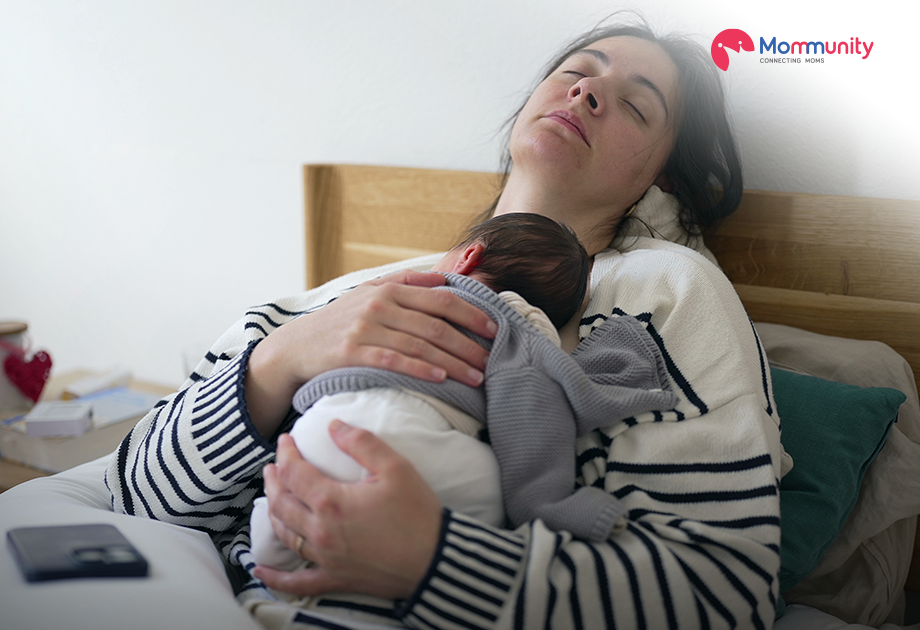
Newborn sleep can leave even a calm, prepared person feeling completely undone. You may be tired enough to cry, but still too alert to fall asleep when the baby finally does. You may spend the day telling yourself that you will rest later, then reach the night feeling wired, sore, hungry, and already worried about the next wake-up.
That is why realistic new mom sleep survival tips matter. In the first weeks, the problem is rarely just “sleep less.” It is broken sleep, physical recovery, mental overload, and the pressure to keep functioning anyway.
If you are dealing with a new mom sleep problem, struggling with a new mom sleep schedule, or noticing new mom sleep anxiety, you are not imagining how hard this feels. Postpartum sleep disruption is real, and it can affect mood, patience, healing, confidence, and daily coping.
Why sleep feels so hard after birth

The baby waking often is only one part of the story. Your body may still be healing. Feeding may hurt. Your breasts may feel full and uncomfortable at night. You may be listening for every sound the baby makes. Even when the room is quiet, your mind may stay switched on.
A few common reasons sleep deprivation in new mothers feels so intense include-
- frequent feeds and diaper changes
- physical discomfort after delivery
- hormonal changes
- anxiety about the baby
- pressure to catch up on chores during the day
- difficulty falling back asleep after a wake-up
This is also why “sleep when the baby sleeps” can feel too simple to be useful. Sometimes the baby sleeps and your mind does not.
The most useful mindset shift
A lot of mothers wait too long to rest. They tell themselves they will lie down after the bottles are washed, after the laundry is folded, after the kitchen is cleared, or after one more small job.
But postpartum recovery does not usually happen in the leftover spaces. Rest often needs to be protected before the rest of the day fills up again.
A better question is-
- what can wait
- what can someone else do
- what actually helps me recover right now
That one shift can change the whole day.
New mom sleep survival tips that work in real life

These are not perfect-system tips. They are the kind that help when life is messy and the baby does not care what time it is.
1. Protect the baby’s best sleep stretch
Most newborns have one stretch that is slightly better than the rest. It may still be short, but it is often your best chance at the deepest rest you will get that day.
Try to build your own sleep around that stretch by-
- going to bed earlier than usual
- finishing the essentials before it starts
- skipping unnecessary evening tasks
- asking your partner to cover the wake-up before or after it if possible
Sometimes one slightly better block of sleep helps more than several broken naps.
2. Use shifts if you have help
If you have a partner or another trusted adult around, divide one part of the night. Even one protected block of three to four hours can help more than parents expect.
That could look like-
- one person taking the first wake-up
- one person covering the early morning stretch
- one person handling the baby for a set block while the other sleeps without listening for every sound
It does not need to be perfect. It just needs to give you one part of the night where you are not fully on duty.
3. Keep overnight care low-stimulation
Dim lights. Minimal talking. No endless scrolling. Keep nappies, wipes, burp cloths, water, and feeding supplies close.
The less your brain has to fully wake up, the easier it is to settle again.
4. Do not turn every nap into chore time
Some baby naps should become dishwashing time. Some should become your recovery time.
If every quiet moment turns into productivity, your body never gets a proper chance to come down.
5. Rest even if sleep does not happen
Sometimes a new mom’s sleep problem is that your body is tired but your mind stays alert.
If sleep does not come, you can still rest by-
- lying down in a dark room
- putting your phone away
- closing your eyes
- staying still for a few minutes
- taking slow breaths instead of forcing sleep
Quiet rest is still better than spending the whole window doing more work.
What a realistic new mom sleep schedule looks like

A strict new mom sleep schedule often fails because newborns do not care about strict plans. A loose rhythm works better.
A more realistic day can look like this.
Morning
Try to keep the first part of the day gentle.
Helpful things include-
- eating something early
- drinking water before you get too drained
- getting daylight if possible
- keeping expectations low
Afternoon
This is often where exhaustion catches up.
Try to-
- rest during one nap window
- ask for help before you are fully depleted
- save only the essential tasks for your higher-energy moments
Evening
This is the best time to set yourself up for a slightly easier night.
Try to-
- prepare overnight supplies early
- reduce stimulation before bed
- go to sleep based on the baby’s better stretch, not your old routine
Night
Keep things basic and calm.
That usually means-
- low lights
- simple feeds and diaper changes
- no extra activity
- back to bed as quickly as possible
This rhythm will not make sleep easy, but it can make it less chaotic.
New mom sleep anxiety is real

One of the hardest parts of postpartum sleep is that your body can feel exhausted while your mind refuses to stop scanning for danger. That is where new mom sleep anxiety often shows up.
It can feel like-
- checking the baby again and again
- lying down and suddenly feeling more awake
- replaying worst-case thoughts
- staying alert even when the baby is asleep
- feeling dread when night comes
A few practical things can help in the moment-
- Write the fear down instead of replaying it
- Use one calming phrase, such as “The baby is asleep, and I can rest now”
- Ask someone else to watch the baby for one sleep block if possible
- keep night feeds low-light and low-phone
- Tell your doctor if anxiety is keeping you from sleeping, even when the baby sleeps
When exhaustion may be something more serious
There is ordinary newborn tiredness, and then there is a level of depletion that starts affecting safety, mood, and daily function.
Please pay closer attention if you notice-
- crying often and not feeling able to recover emotionally
- panic when night is approaching
- feeling detached from the baby or from yourself
- hopelessness or numbness
- intrusive thoughts that scare you
- feeling so exhausted that daily functioning feels unsafe
That matters because sleep deprivation in new mothers can overlap with anxiety and depression. When it starts feeling bigger than normal tiredness, it deserves proper support.
Small things that make the day easier
Sleep is still the main issue, but a few basic supports can make the exhaustion less brutal.
Helpful basics include-
- keeping easy snacks near your feeding spot
- drinking water regularly
- lowering the standard for housework
- saying yes when someone offers practical help
- protecting one short rest window in the day
- getting outside for a few minutes if you can
None of these fixes newborn sleep. It does help you cope better with it.
When to reach out for help
Please do not wait until you are fully overwhelmed.
Reach out to your doctor, therapist, or postpartum support team if-
- Your anxiety is blocking sleep, even when the baby sleeps
- You feel persistently low, panicked, or emotionally flat
- You feel detached from daily life
- Your exhaustion feels unsafe
- You are having thoughts of harming yourself
Asking for help early matters. You do not need to prove how much you can carry alone.
The Final Note
The best new mom sleep survival tips are usually the least glamorous ones.
Protect one decent stretch of sleep. Let some chores wait. Keep nights simple. Eat before you crash. Ask for help earlier. Pay attention if your new mom’s sleep problem starts looking more like anxiety, depression, or emotional overload.
You do not need to “win” the newborn stage. You need enough rest, enough support, and enough honesty with yourself to get through it with your health still intact.
FAQs
Q1. What is the biggest new mom sleep problem in the early weeks?
A. Usually, it is broken sleep from frequent waking, mixed with physical recovery and a mind that stays alert even when the baby is asleep.
Q2. Is sleep deprivation in new mothers really that serious?
A. It can be. It affects mood, concentration, recovery, and emotional stability, and it can overlap with postpartum anxiety or depression.
Q3. What does new mom sleep anxiety feel like?
A. It often feels like being deeply tired but unable to switch off. You may keep checking the baby, replaying fears, or feeling more awake when you finally lie down.
Q4. Is there a realistic new mom sleep schedule?
A. Yes, but it should stay flexible. It usually works better to build your sleep around the baby’s best stretch instead of trying to force a fixed routine.
Q5. When should I ask for help?
A. Ask early if you feel panicked, persistently low, emotionally flat, or unable to sleep even when given the chance.
Disclaimer
This blog/article is intended for general informational and educational purposes only. It is not a substitute for professional medical advice, diagnosis, or treatment. Always consult your doctor or qualified healthcare provider with any questions about a medical condition, symptoms, or treatments.