
Preparing Your Body for Delivery in the Last Month
The last month of pregnancy can feel long, heavy, and unpredictable. The day you feel ready to deliver your baby will arrive at some point. Your body will struggle with getting comfortable on some days. That is completely normal. Your body requires support through basic practices which provide actual assistance during these last weeks of pregnancy.
The preparation for delivery needs to concentrate on practical methods of body preparation. You should maintain a nutritious diet. You should engage in light physical activity. You should take breaks for relaxation. You should consume sufficient water. You should observe how your body functions. You should maintain communication with your physician. Your final month needs to be pressure-free. Your final month requires you to maintain a constant state of being.
Why the last month matters

The final few weeks are not just a waiting period. Your baby is still growing. Your body is adjusting. Your muscles, joints, posture, sleep, and energy levels may all feel different now. This is also the stage when many women start thinking seriously about labour and asking what they should do to feel more prepared.
That is why the last month matters. It gives you time to make small daily choices that can help you feel stronger, calmer, and more aware of what your body needs.
Best ways to prepare your body for delivery
If you want a clear starting point, begin with these basics-
- Walk regularly if your doctor has not advised rest
- Eat meals that keep your energy steady
- Drink enough water through the day
- Practice slow breathing
- Work on pelvic floor awareness
- Rest before you feel completely exhausted
- Keep your hospital bag and reports ready
- Learn the signs that mean you should call your doctor or hospital
These habits may sound simple, but simple works well in late pregnancy. The goal is to support your body, not push it.
Move gently and consistently

In the last month, your body usually responds better to regular gentle movement than to effort that leaves you drained. You do not need intense exercise. What helps most is staying active in ways that feel manageable.
Good options include-
- Walking
- Light stretching
- Prenatal yoga if your doctor has approved it
- Gentle hip and lower back mobility exercises
Walking is one of the easiest ways to prepare your body for delievery because it helps with stiffness, circulation, and overall comfort. Even a short walk once or twice a day can help. Some days you may feel active. Some days you may slow down. That is fine.
Stop and speak to your doctor if you notice-
- Dizziness
- Bleeding
- Leaking fluid
- Strong pain
- Unusual breathlessness
- Reduced baby movement
Practice breathing before labour begins
Breathing practice is useful because labour is easier to cope with when your body is not full of tension. Many women tighten their shoulders, jaw, hands, and neck without realizing it. In the final month, learning how to soften those areas can help you later during contractions.
Try this simple breathing practice-
- Sit or lie down in a comfortable position
- Inhale slowly through your nose
- Exhale slowly through your mouth
- Relax your jaw and shoulders
- Repeat for a few minutes
This is not complicated, but it can make a real difference. When labour starts, familiar breathing can help you stay more settled.
Prepare your pelvic floor with balance
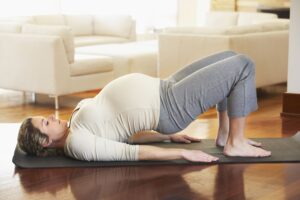
A lot of women hear about pelvic floor exercises in pregnancy, but many are told only to tighten. That is only one part of it. During birth, those muscles also need to release.
A more balanced approach includes-
- Gentle pelvic floor squeezes
- Holding for a few seconds
- Fully relaxing after each hold
- Breathing slowly while you practice
The goal is awareness, not strain. If you can see a women’s health physiotherapist, that can be very helpful in the last month.
Eat in a way that supports strength and comfort
Food in the final month does not need to be strict or complicated. It needs to help you feel nourished. Your body needs steady fuel for daily energy, labour, and recovery after birth.
Try to include-
- Protein from dal, paneer, curd, eggs, fish, chicken, or beans
- Iron-rich foods such as lentils, spinach, dates, and legumes
- Fibre from fruits, vegetables, oats, and whole grains
- Calcium-rich foods that suit your diet
- Enough water and fluids through the day
If large meals feel uncomfortable, smaller meals can be easier. Many women deal with acidity, fullness, or bloating in the final month, so lighter balanced meals often feel better.
Rest without feeling guilty

Late pregnancy can make rest feel necessary and frustrating at the same time. You may feel tired, but still sleep badly. You may want to pause, but also feel that too much is left to do. Even then, rest matters.
Helpful ways to rest include-
- Lying on your side with pillow support
- Taking short breaks during the day
- Reducing long periods of standing
- Asking for help with tiring work
- Keeping nights as calm as possible if sleep is disturbed
Rest is part of preparation. It helps your body hold on to energy for labour and recovery.
Pay attention to posture and body position
In the last month, pressure on the lower back, hips, and pelvis usually increases. Small posture changes can make daily movement easier.
Try these habits-
- Sit with proper back support
- Avoid staying in one position too long
- Bend carefully when picking things up
- Keep your knees soft when standing
- Use pillows when sitting or sleeping
These changes may not remove every discomfort, but they can reduce unnecessary strain.
Consider perineal massage if your doctor agrees

Some women are advised to try perineal massage in the final weeks, especially during a first pregnancy. It may help the area become more familiar with gentle stretching.
If your doctor or midwife says it is suitable, keep these points in mind-
- Start only if you have been told it is safe
- Use a gentle method
- Stop if you feel pain or irritation
- Avoid it if you have bleeding or infection
- Ask your provider to explain the correct way to do it
This is optional. It can be useful for some women, but it is not something you have to do.
Know what to avoid in the final month
The last month is not the best time to try random advice or force your body into routines that do not feel right.
Try to avoid-
- Starting intense exercise suddenly
- Going long hours without eating
- Not drinking enough water
- Ignoring swelling, headaches, or reduced baby movement
- Standing too long without rest
- Trying home remedies without asking your doctor
Keeping things simple is usually the safer choice.
Learn the signs that labour may be near
One of the most important parts of preparation is knowing what labour or a medical concern may look like. That can help you respond faster and with less panic.
Common signs that labour may be starting include-
- Contractions that become regular and stronger
- A gush or slow leak of fluid
- Bloody show
- More pelvic pressure
- Lower back pain that comes in waves
Call your hospital or maternity team if you notice-
- Vaginal bleeding
- Reduced baby movement
- Waters breaking
- Severe headache
- Blurred vision
- Sudden swelling
- Strong pain that feels unusual
Do not ignore changes that feel wrong to you. It is always better to ask.
Keep the practical side ready
Physical preparation feels easier when practical things are already sorted. Last-minute confusion can create extra stress.
Keep these ready-
- Hospital bag
- Medical file and reports
- ID and insurance papers if needed
- Comfortable clothes
- Maternity pads
- Baby clothes and blanket
- Phone charger
- Water bottle and toiletries
Also make sure you know-
- Which hospital you are going to
- How you will get there
- Who will go with you
- Which number you need to call first
The Final note
The last month of your pregnancy requires you to establish permanent movement patterns which will help your body throughout the entire process of pregnancy and labor and recovery. The combination of gentle movement and balanced nutrition and proper hydration together with sufficient rest and breathing exercises and medical support will provide you with more benefits than your anxiety and stress.
Your body needs proper support during the last weeks of your life. Your body needs proper support during the last weeks of your life. That is enough.
FAQs
Q1. How can I prepare my body for delivery in the last month?
You can prepare your body for delivery in the last month through walking, stretching, good food, hydration, breathing practice, pelvic floor awareness, and regular rest. Keep your routine simple and stay in touch with your doctor.
Q2. What is the best exercise in the last month of pregnancy?
Walking is often one of the most useful exercises in the final month. Light stretching and prenatal yoga, if approved by your doctor, can also help with stiffness and discomfort.
Q3. What foods help in the final month before delivery?
Balanced meals with protein, iron, fibre, calcium, and enough fluids are helpful. Smaller meals may feel easier if you have acidity, bloating, or reduced appetite.
Q4. Can walking help prepare your body for labour?
Yes, walking can help maintain mobility, improve circulation, and reduce stiffness. For many women, it is a practical way to stay active in late pregnancy.
Q5. When should I call the hospital in the last month?
Call your maternity team if you have regular strong contractions, your waters break, you notice vaginal bleeding, or your baby’s movement decreases.
Disclaimer
This blog/article is intended for general informational and educational purposes only. It is not a substitute for professional medical advice, diagnosis, or treatment. Always consult your doctor or qualified healthcare provider with any questions about a medical condition, symptoms, or treatments.