
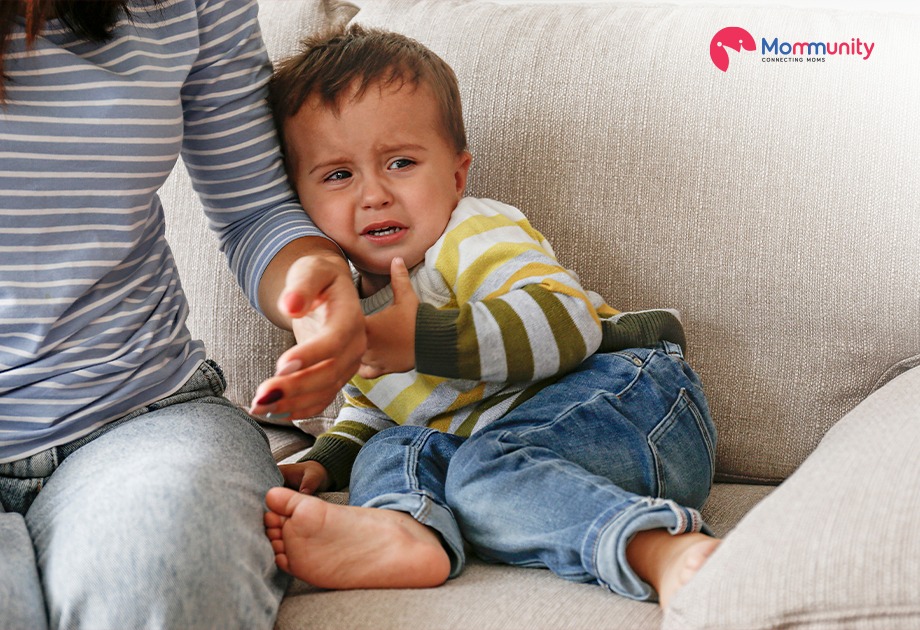
The first emotional struggle in a child’s life does not happen in the outside world or with other people; it happens in everyday moments at home between the child and the parent.
One moment, everything is calm. Next, your toddler looks at you and throws the phone on the floor. At that moment, it feels personal. Frustrating. Almost intentional. But it is not really misbehavior. It is communication, and often, these everyday moments are the first signs your toddler needs emotional coaching, even though they may look like ordinary toddler behavior.
Because toddlers do not yet have the brain development to express big feelings in words, their emotions often come out through actions like crying, screaming, or throwing things. This is why many toddler tantrums are less about defiance and more about an overwhelmed, developing brain trying to cope, and when this keeps happening every day, it can feel like a behavior problem, but in reality, it may be a sign your toddler needs emotional coaching.
Why Toddler Tantrums Feel So Personal But Are Not

Since a toddler’s brain is still learning how to handle emotions, control impulses, and pause before acting. It is not just about your toddler. It is also about what is going on inside you as a parent because your child’s behavior directly affects your emotions, your patience, and how you respond in that moment.
So in the middle of all this, your mind starts running
- “Am I raising my child the right way?”
- “Why are the tantrums getting worse instead of better?”
- “Why does my child not listen?”
- “Am I doing something wrong?”
Slowly, it stops being about one tantrum and starts feeling like you are failing at something much bigger. In fact, these everyday struggles can be early signs your toddler needs emotional coaching.
But underneath all that, your intention is simple.
- You want your child to be okay.
- To feel strong, not overwhelmed.
- You want fewer meltdowns, especially outside the house, where suddenly everyone becomes a silent judge.
- You want your home to feel a little more peaceful than it did yesterday.
This is where things begin to shift. You do not need perfect parenting. You need small, meaningful moments where your child feels understood.
Common Toddler Tantrums That Are Actually Emotional Signals

What if the behaviors that frustrate you the most are actually the moments your child needs you the most? Many of the behaviors we label as toddler tantrums are actually signals of frustration, overstimulation, or unmet emotional needs. You must have noticed this.
- Your child screams because you gave them the blue cup instead of the red one.
- They cry over anything or cry loudly in public, and you can almost feel people judging you.
- They refuse to share, and your mind jumps straight to future complaints from people around.
- They shout “NO” like it is their full-time job.
Day after day, it feels exhausting. Confusing. Sometimes even embarrassing. But this is the shift most parents miss. These are not random problems. These are emotional training moments happening in real time. So, because they do not look like learning moments, we react the only way we know how.
We rush to stop the behavior. We skip understanding the feeling. Without realizing it, we miss the teaching moment completely. That is why the same behaviors keep repeating.
Why Your Toddler Acts This Way (Simple Science)
If these moments keep repeating, it is easy to feel like your child is doing it on purpose.
But what looks like difficult behavior is actually something much simpler. Your toddler is not trying to test your patience. Their brain is still under construction.
When parents start seeing tantrums this way, the question shifts from “Why is my child doing this?” to “How can I help?”, which is where people often start searching for how to stop toddler tantrums, when the deeper answer often lies in emotional support. Think of it like this.
The emotional part of their brain is already active and strong. That is why feelings come out so big and so fast. But the thinking and control part of the brain is still developing slowly. This is the part that helps them pause, understand, and choose a better response.
So when your child screams, throws, or refuses, it is not because they want to upset you. It is because the emotional brain is taking over, and the control system is not ready yet.
1. Big Emotions, Very Small Control
Your child feels everything intensely. Joy is big. Anger is big. Frustration is very big. But the part of the brain responsible for control (called the prefrontal cortex) is still immature.
Example:
You feel irritated, but you take a deep breath and stay quiet. Your toddler feels irritated and throws a spoon. Same emotion. Very different brain capacity to handle it.
2. They Feel More Than They Can Say
Language skills are still growing. Emotions are not. So what happens?
Feelings come out as actions.
Example:
Instead of saying, “I feel frustrated because I cannot stack this block,” your toddler simply screams and knocks everything over. That is not bad behavior. That is a limited vocabulary meeting big emotions.
3. Impulse Is Faster Than Thinking
The emotional part of the brain reacts instantly. The thinking part takes time to catch up.
Example:
They hit first and only later realize something went wrong. It is not planned. It is fast wiring, not bad intention.
Does your toddler really need emotional coaching this early?
Short answer: yes. Long answer: Also yes, but in a very everyday, real-life way that most parents already experience without realizing it. Because emotional coaching for toddlers helps children build skills before patterns of reactive behavior become harder to manage. On the surface, it looks like:
- Fewer tantrums
- Better listening
- More cooperation
But underneath, emotional regulation for toddlers is developing through repeated interactions that teach the brain how to handle stress. When you respond to emotions steadily and calmly, even when you feel like running away for five minutes
- Your child starts to feel safe because their feelings are not being ignored or rejected
- Their brain slowly begins to connect emotions with simple words
- They start learning that feelings can be handled, not just exploded
Here is the simple science behind it. Every time you name a feeling like “you are feeling angry” or “you are upset right now,” You are not just talking; you are actually helping your child’s brain build connections between emotions and understanding. This is how emotional control develops, not in one big moment but through small repeated everyday interactions that slowly shape how they respond to life.
Reality Check (The One That Actually Helps)
Toddlers do not need perfection. They need practice, and you will repeat the same lesson many times. Yes, the same one again and again.
Welcome to parenting, when just getting through the day feels like a small achievement.

Emotional coaching for toddlers
1. Name the Feeling
This is one of the simplest tools in emotional coaching for toddlers. Instead of saying, “Stop crying!” Try saying, “You are feeling angry because the toy broke.”
Why this works (simple science) – Naming emotions activates the thinking part of the brain, which helps calm the emotional part.
Know that it feels strange at first. You might think, “I am talking like a narrator.” But over time, it can help reduce the intensity of toddler tantrums, because children begin expressing feelings with words instead of behavior.
2. Mirror Play (Yes, It Feels Silly! Do It Anyway)
Stand in front of a mirror and make faces. Happy. Sad. Surprised. Dramatic. Ask your child, “Can you show me a happy face?”
Why this works – Children learn emotions by observing facial expressions. Their brain has “mirror neurons” that copy what they see.
You will notice
When will you laugh?
They will definitely laugh.
That is emotional learning, too.
3. Story Time With Pauses
While reading, pause and ask your child, “What do you think this character feels?”
Why this works – Stories activate imagination and emotional understanding in a safe setting.
Example 1 – A character in a story is crying because they lost their favorite toy.
You ask your child, “How do you think they feel right now?” Your child begins to relate it to their own feelings when something similar happens.
Example 2 – A child in a story is upset because someone took their snack.
You ask, “What do you think they are feeling?” Your toddler connects it to their own small everyday experiences and slowly starts understanding emotions like anger and sadness. This is how learning empathy begins.
4. “What Would You Do?” Conversations
Ask your child playful questions, “What would you do if someone took your toy?”
Why this works – It builds problem-solving pathways in the brain before real conflict happens. But keep in mind, during the actual moment, they may still scream, because young children cannot always access what they have learned when emotions are high.
But slowly, those earlier conversations start showing up, because repeated practice helps the brain build stronger connections for better responses over time.
5. Calm-Down Corner (Not a Punishment Zone)
Create a small cozy space with:
- Cushions
- A soft toy
- Something comforting
Important shift: This is not a timeout. This is a “calm down and reset” space.
Why this works – It can help if you are wondering how to stop toddler tantrums without punishment, because it teaches calming as a skill rather than forcing compliance.
6. Role Play with Toys
Tell your child, “Teddy is sad. What can we do?”
Why this works – Pretend play allows children to explore emotions without pressure. Maybe your child comforts the teddy or shows care in their own way. That is how they practice emotional understanding in a safe space without pressure.
Next time, in a real situation, they may come to you for comfort instead of reacting first, because the brain starts remembering these small practice moments and slowly uses them in real life.
7. The 10-Minute Bonding Time
Earlier, parents and children did not need to “schedule” bonding time because life itself happened together. But in today’s world, where everyone is busy and always on their phone, even bonding needs a reminder, like it is a meeting.
So the rule says. The 10 Minute Bonding Time: Just 10 minutes. No phone, no multitasking, no “wait, I am busy” excuses. Just you and your child. Funny how something so natural now needs a timer like we are booking a meeting with our own kids.
Why this works – Consistent connection builds emotional security. A secure brain handles stress better.
Reality check:
Some days it will feel easy. Some days it will feel like a very long 10 minutes. Both count.
8. Teach Simple Coping Tools
- “Smell the flower, blow the candle” (Gamified deep breathing exercise) because it helps slow down the body and calm big emotions by making breathing steady and controlled
- Hugging themselves because gentle self-hugging gives a feeling of safety and helps the child calm down when they feel overwhelmed
- Asking for help because it teaches the child that they do not have to handle big feelings alone and that support is always available
Why this works – These small practices support emotional regulation for toddlers by giving the brain alternatives to impulsive reactions. That is how children slowly learn what to do before emotions turn into full toddler tantrums.
So, what is Actually Happening During These Activities?
Every small moment is building something in your child.
- They start understanding emotions because you name or label them for them.
- They feel safe expressing emotions because you accept how they feel.
- They slowly learn to regulate because you guide them through it.
This does not happen instantly. It is built through repeated, small moments over time.
How do you do Emotional regulation for toddlers Daily?
Keep it simple:
- Talk about feelings during everyday moments because it helps your child connect emotions with real-life experiences
- Validate before you guide because children listen better when they feel understood first
- Stay calm as much as possible (not perfectly, just enough) because your calmness helps your child learn how to calm themselves
This is the heart of emotional coaching for toddlers, and often the missing piece for parents trying to figure out how to stop toddler tantrums in a lasting way.
Most importantly, your child learns emotional control by watching you.
But It Is Not As Easy As It Sounds, and Yes You Will Make Mistakes (like every other parent, too)
Toddler tantrums are not just behavior to manage. They can be the starting point for building emotional regulation for toddlers, one small moment at a time.
- Saying “Do not cry” → Instead, say “I see you are upset” because dismissing emotions makes children feel unheard, not calmer.
- Expecting instant calm → Emotional skills take time because toddlers need repeated guidance to learn how to regulate feelings. Think in months and years, not minutes.
- Ignoring emotions → Connection matters before correction because a child listens better after they feel understood and safe.
Once you start applying this in real life, you quickly realise something important.
You do not need special tools or perfect methods, just daily small moments, simple words, and consistent connection, because emotional intelligence is not something you teach in one big serious talk, it is something that gets built slowly in everyday life usually right in the middle of spilled food, loud cries, and you wondering you just explained it clearly and still your child is back to doing the same thing like it was a new idea.
FAQs
1. How do I teach emotions to my toddler?
A. By naming emotions, modeling calm behavior, and using role-play-based activities daily.
2. What is emotional regulation for toddlers?
A. Emotional regulation for toddlers is a child’s growing ability to recognize feelings, calm down, and respond instead of reacting impulsively. Because toddlers are still developing this skill, they often express emotions through crying, yelling, or throwing things. Parents help build emotional regulation by naming feelings, modeling calm behavior, and practicing coping skills in everyday moments.
3. Can emotional intelligence reduce tantrums?
A. Yes, because children who understand emotions can express them better instead of acting out of instinct.
4. How to stop toddler tantrums?
A. The goal is not to “stop” all tantrums, because toddler tantrums are a normal part of development. The real focus is on reducing their intensity and helping your child handle emotions better. Stay calm, validate your child’s feelings, name the emotion, and guide them toward simple coping tools like deep breathing, a calm-down corner, or asking for help. Over time, these approaches can reduce frequent meltdowns.
5. What is emotional coaching for toddlers?
A. Emotional coaching for toddlers is the process of helping young children understand emotions instead of simply correcting behavior. This includes validating feelings, teaching emotion words, and guiding them with simple calming tools like breathing or holding you close. Over time, emotional coaching helps children develop self-control, resilience, and healthier ways to express big feelings.